This recipe for Gordon Ramsay tuna tartar is a simple, restaurant-style appetizer made with sushi-grade yellowfin tuna, soy, chili garlic paste, and sesame oil.
This easy tuna tartare recipe delivers clean, balanced flavor and an impressive presentation with only 10 minutes of prep, making it ideal for entertaining or a refined first course at home. This recipe is easy enough for a beginner level cook to make, but will make you look like a 5 star chef.
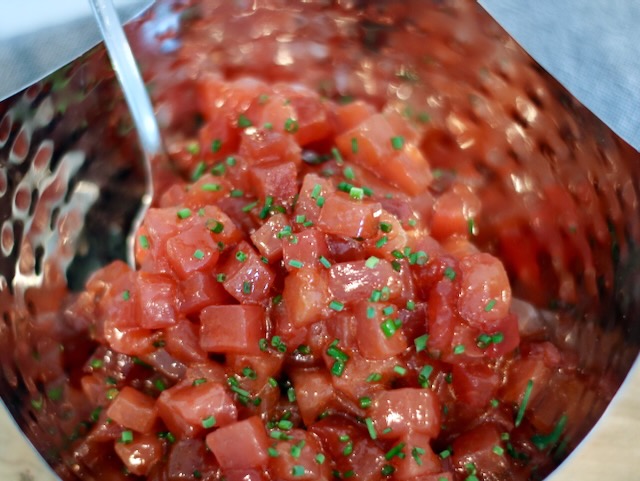
What Is Tuna Tartar?
Tuna tartar (often spelled tartare) is a popular dish made from finely diced raw tuna that is lightly seasoned and served fresh. The key is using high-quality sushi-grade fish and minimal ingredients so the natural flavor and texture remain the focus.
Unlike heavily marinated seafood dishes, such as ceviche, tuna tartar is meant to taste clean and balanced, with just enough seasoning to enhance the fish.
Simple Ingredients. Impressive Results.
Why This Gordon Ramsay Tuna Tartar Recipe works
The ingredient combination is simple but intentional, and unlike some more complicated recipes, the ingredients are not difficult to source at most food stores.
The result is a well composed appetizer that feels restaurant-worthy while remaining very approachable to prepare at home.
It is particularly well suited for:
- small gatherings
- date nights
- warm weather meals
- occasions when a light first course is preferred
Two Ways to Serve Tuna Tartar
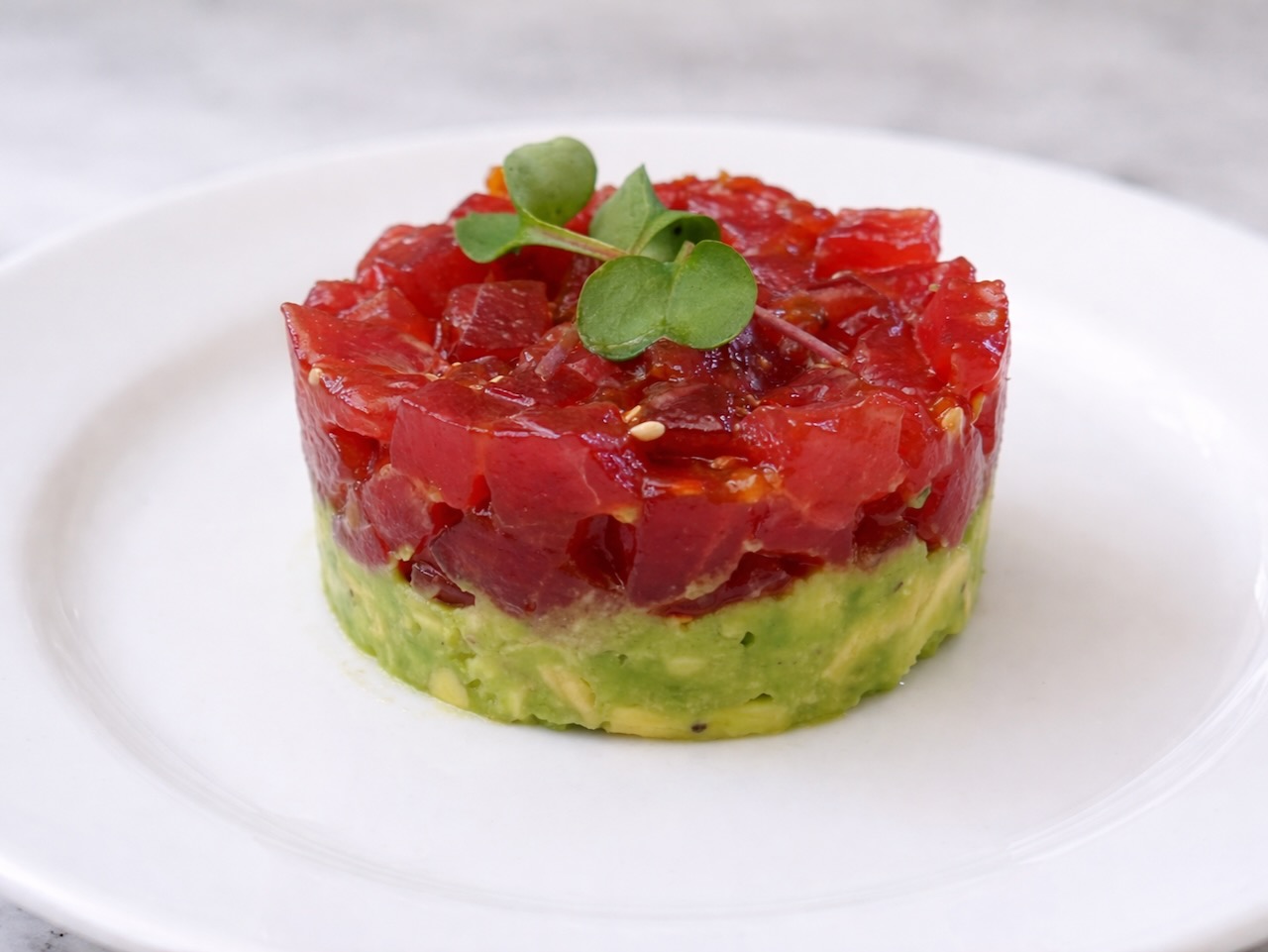
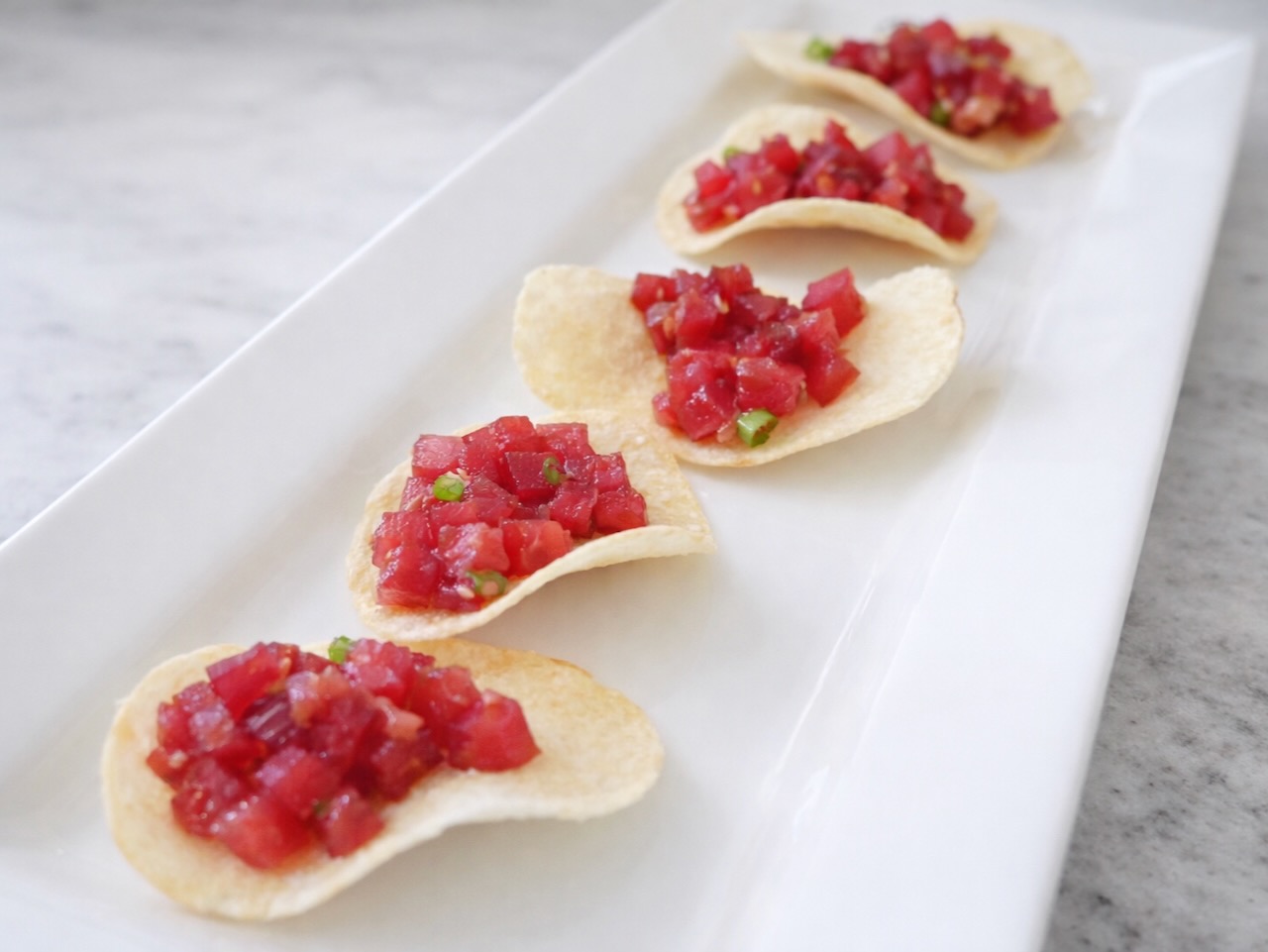
One of the advantages of this recipe is its flexibility. The same tartar can be presented in a more composed style or served casually depending on the setting.
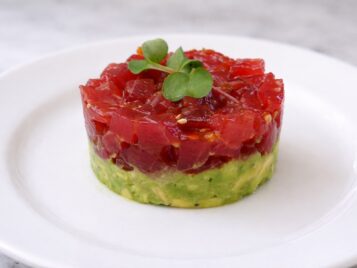
Plated with Mashed Avocado
Layering the tuna tartar over lightly mashed avocado creates a clean, structured presentation that feels elegant and intentional. The avocado adds subtle richness while maintaining the fresh character of the dish.
Using a round mold or cookie cutter creates the layered appearance often seen in restaurant plating.
Served with Chips
For a more relaxed approach, or for serving to a crowd, the tuna tartar can be served with cassava chips, potato chips or wonton crisps. Guests can assemble bites themselves, or you can plate individual bites and pass them for an elegant Hors d’oeuvre, making this a simple option for entertaining or small gatherings.
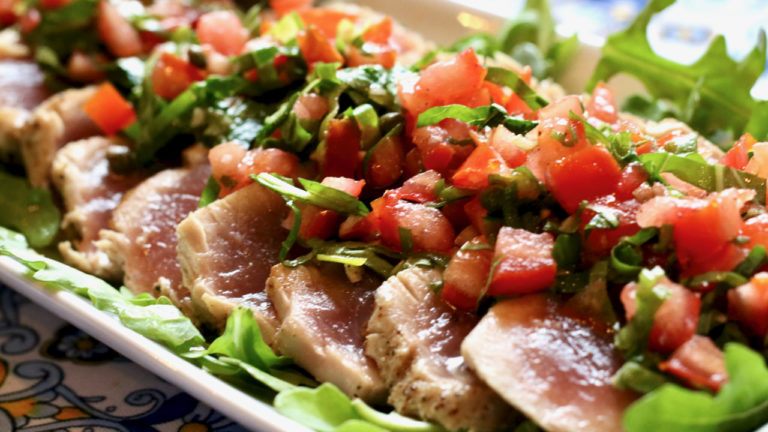
Common Questions about Tuna Tartar
Is tuna tartare safe to eat?
Tuna tartare should always be made with sushi-grade fish purchased from a trusted source. Fish labeled sushi-grade has been handled according to guidelines that reduce the risk associated with consuming raw seafood.
What type of tuna is best for tuna tartar?
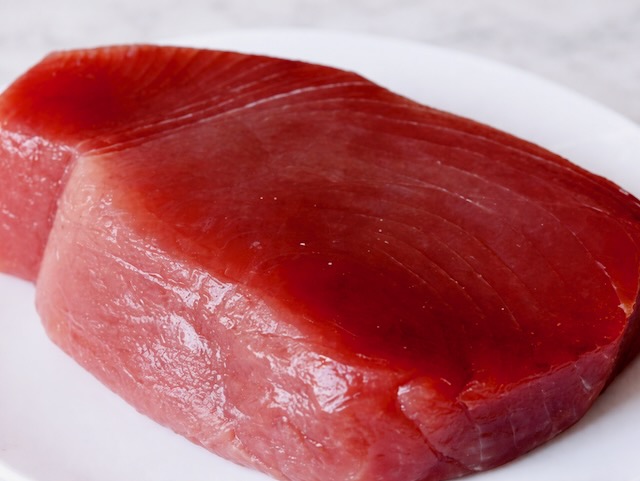
Yellowfin tuna (ahi) is most commonly used because of its clean flavor, firm texture, and bright color. Look for cuts with very rich red color and avoid pale pink tuna. To learn more about types of Tuna, check out this article from Fulton Fish Market.
Can tuna tartare be made ahead of time?
It depends on the recipe. Gordon Ramsay’s tuna tartar featured here can be prepared several hours in advance and refrigerated, though it is best served as soon as possible for optimal freshness and texture. If a recipe includes citrus, it should be assembled just before serving, as the acid will begin to cure the tuna, causing the color to change and the texture to become softer.
What can you serve with tuna tartare?
Common pairings include avocado, chips, crackers, cucumber slices, or lightly dressed greens.
Pro Tips for how to make Gordon Ramsay Tuna Tartare
- Use sushi-grade tuna from a trusted fish market.
- Par-freezing the tuna for 10–15 minutes helps create clean, even cuts and makes the fish easier to handle.
- Use a very sharp knife rather than a serrated blade to maintain the smooth, silky texture of the tuna.
- As you cut the tuna, look for slightly shiny, pale strips between sections of the flesh — these firmer pieces of connective membrane between sections of the fish don’t dice as smoothly and can create a chewy texture. They can simply be pulled away for the most tender texture.
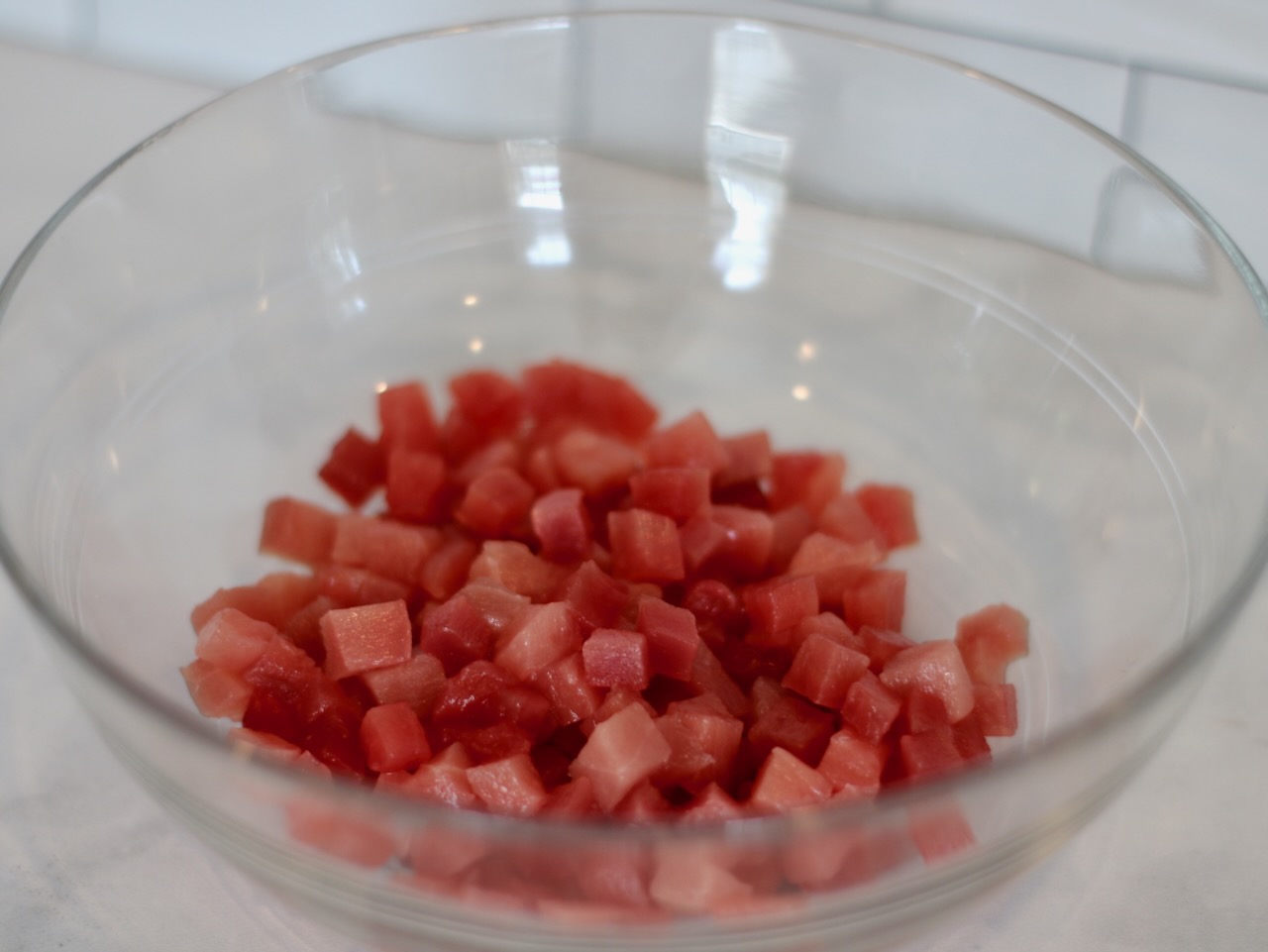
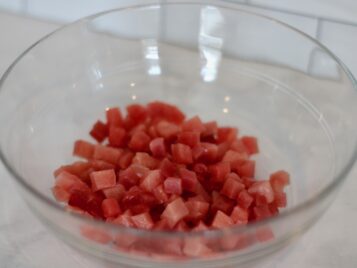
- Cut the tuna into evenly sized cubes so the tartare feels balanced and refined when served.
- Season lightly. The goal is to enhance the natural flavor of the fish rather than mask it.
- Serve immediately after preparing for the best texture and flavor, but I have successfully prepared it up to one day in advance. (Save extra sauce on the side if this is the case)
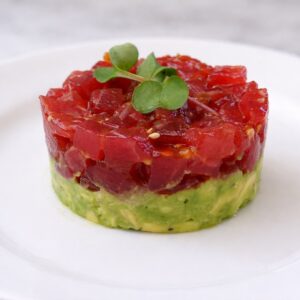
Gordon Ramsay Tuna Tartar
Ingredients
- 400-500 g fresh yellowfin tuna steak → about 14-16 oz
- 15 g Low Sodium soy sauce → about 1 Tbsp (Gluten free soy sauce can be substituted)
- 20 g chili & garlic paste → about 1 Tbsp + 1 tsp (Lee Kum Kee)
- 10 g sesame oil → about 2 tsp
- 3 g honey → about ½ tsp
- 3 g oyster sauce → about ½ tsp (optional if you can't find it)
OPTIONAL AVOCADO BASE (for individual plated serving)
- 2 ripe avocados diced
- 2 tsp olive oil
- 1.5 tsp fresh lime juice
- pinch kosher salt
- pinch black pepper
OPTIONAL CHIP BASE (for shared serving)
- Cassava Chips or Potato Chips
GARNISH IDEAS
- Sesame seeds
- Scallions
- Micro greens
Instructions
PREPARE THE TUNA
- Using a very sharp knife, dice the sushi-grade tuna into small, even cubes. Tip: briefly par-freeze the tuna for 10–15 minutes to make slicing easier. As you dice, remove any thicker connective tissue or fibrous layers between sections of the flesh for the best texture.

- In a small bowl, combine Tosa soy, chili garlic paste, and sesame oil. If using, add honey and oyster sauce and mix until fully combined.
- Start by gently folding in about half the sauce into the diced tuna until evenly coated. TASTE and add more if needed, in small increments at a time. Avoid overdressing and overmixing.
- Cover and refrigerate for up to one day if needed, but serving within a few hours is best.
OPTIONAL: PREPARE THE AVOCADO BASE
- Dice the avocado and place in a small bowl. Add olive oil, lime juice, salt, and pepper. Lightly mash with a fork, keeping the texture about half mashed and half diced. TASTE for seasoning, being caucious not over salt.
- Place a metal ring mold or round cookie cutter on a plate. Fill the base half way with the avocado mixture and gently press to shape. Spoon the tuna tartar on top of the avocado layer and carefully remove the ring mold.
OPTIONAL ALTERNATIVE SERVING OPTION
- Serve the tuna tartar with cassava chips, potato chips or wonton crisps, for a more casual appetizer. Either pre-assemble or allow guests to build their own bites.

GARNISH SUGGESTIONS
- Garnish with Sesame seeds, scallions or microgreens