
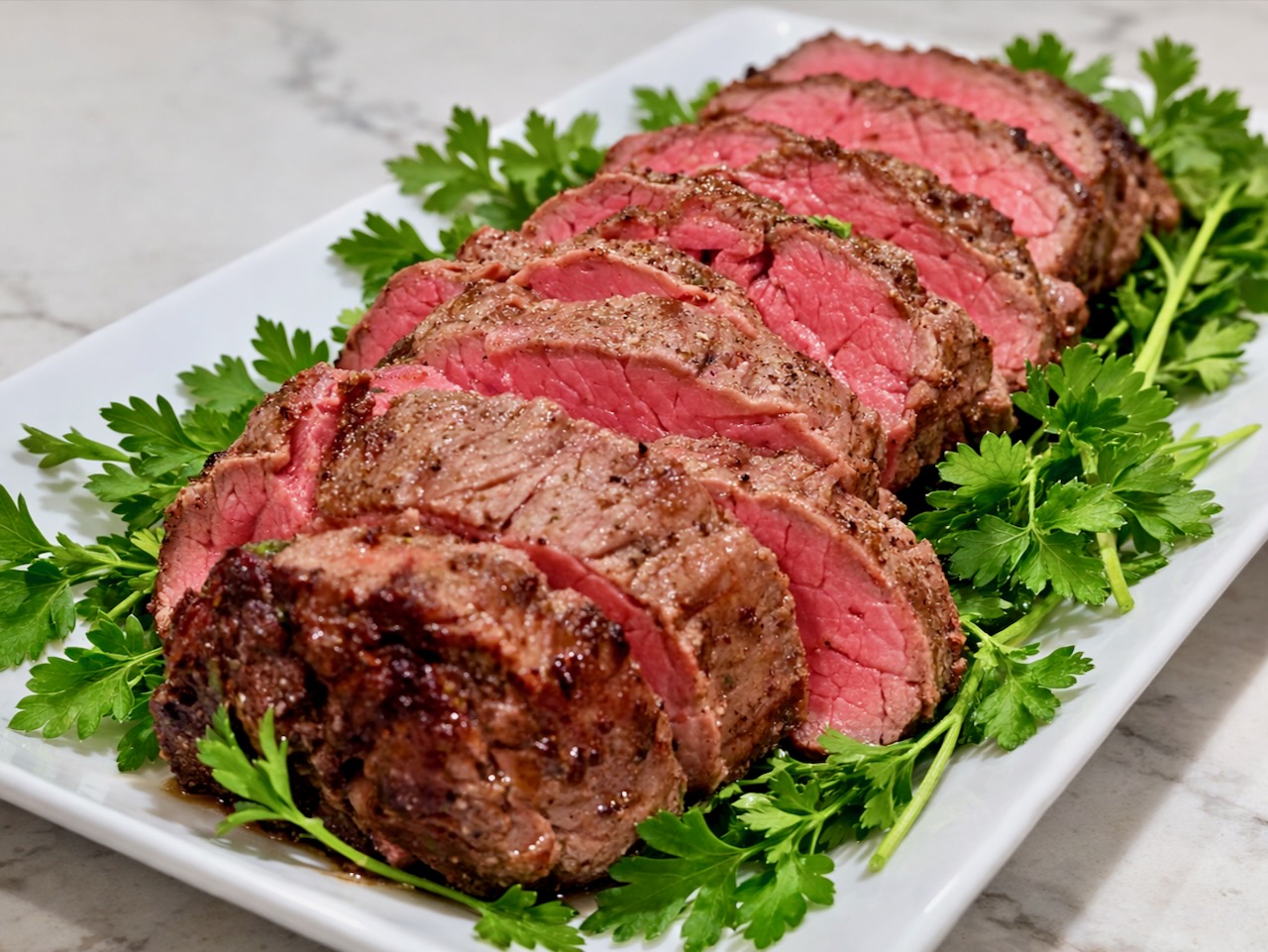
Ina Garten’s Beef Tenderloin recipe is an elegant, foolproof centerpiece that’s perfect for holidays, dinner parties, or any special occasion. Roasted to perfection and packed with rich flavor, it’s surprisingly simple to prepare and always impresses guests.
When you decide to invest in making this beef tenderloin recipe, you want to make sure you have everything you need to ensure absolute perfection and this is where I can help.
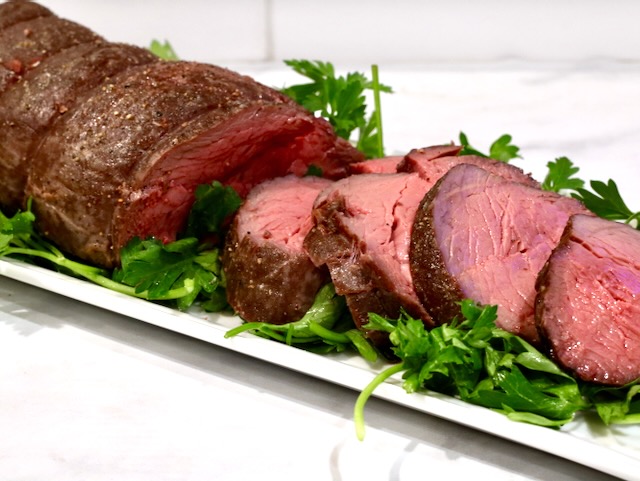
Frequently Asked Questions about How to Make Beef Tenderloin
How to choose a good Beef Tenderloin
When it comes to selecting a good cut of beef, Trager Grills advises to “avoid beef that is a dull color, or has an excess of juice in the package. These are signs that the beef wasn’t stored properly, or has been sitting in the case for too long.” I agree with the advice so I always try to buy fresh, never frozen, beef tenderloin whenever possible. When beef is vacuum sealed, the excess moisture is squeezed out of the beef which it sits in and this impacts the texture and ability to brown. Additionally, when meats are packed and sold vacuum sealed, this usually indicates it was previously frozen and mass distributed. While that is fine for some recipes, this one works best if you can source a fresh, dry cut from a butcher’s counter.
What’s the difference between Filet Mignon Vs Beef Tenderloin?
It can be confusing that this cut of beef often goes by a few names including filet mignon, filet of beef, filet, beef tenderloin, roast beef, and châteaubriand. So what’s the difference? Well, much of this depends on your region, and your butcher’s preference, although there are some differences in the cuts. For example, filet mignon typically refers to an individual steak cut off the tenderloin. Châteaubriand refers to the center cut, or most prized part, of the whole beef tenderloin. If you want to learn more about the names and cuts of beef, check out this article from Kitchn– A complete guide to steak
What Temperature Should Beef Tenderloin be cooked until?
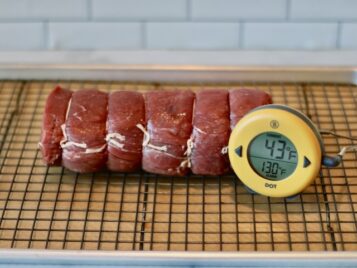
Insert a “leave in” probe thermometer, like the Dot, into the center of the meat. Set the probe to your desired temperature according to the temperature chart below:
Rare: 126-130°F
Medium-Rare: 130- 135°F for medium-rare. (I think 130 is the sweet spot.)
Medium: 135-140°F
Whats sides to serve with beef?
The best side dishes to serve with beef are creamed spinach, roasted or mashed potatoes, and sautéed mushrooms. That said, there is really no wrong answer here. Just keep it simple so the beef can really shine. Don’t forget the Homemade Horseradish Cream Sauce!
Does the size of the beef impact cooking time?
No. Because the beef is slow roasted, the recipe can be adjusted to accommodate a small cut of beef without altering the time, but ultimately temperature is more important than time. I have produced excellent results using varying size cuts from a cut for 4 people to a 4 pound+ for holiday gatherings. Simply, adjust your seasonings correctly.
Pro Tips for How to Make Perfect Beef Tenderloin
- Source your beef. It’s worth the extra money to purchase this cut at a reputable Butcher shop. If you can only find vacuum sealed or previously frozen (which most vacuum sealed cuts are) then you will need to roast the beef for longer and the results will be a “wetter” or “bloodier” meat. This is avoided by using a fresh cut. Trust me, I have learned this the hard way.
- Use the right tools. Invest in a in probe thermometer that monitors you meat temp throughout the cooking process and a good sheet pan with a raised grid rack.
- Allow time for the beef to rest. Don’t skip rest time due to fear of it cooling off. Don’t worry- it will hold its temperature for a long time and still be warm after resting. And if it’s not piping hot, it’s okay! Beef tenderloin roasts are often served at room temperature at some of the finest dining experiences in the world! This is another reason it is perfect for a large gathering.
- Master Chef Tip– Make sure everything else is on the table first before slicing and plating- that’s when it cools off quickest.
Ina Garten has two versions of beef tenderloin that I recommend:
Tarragon wrapped and Classic slow roasted. Both are Amazing! Everything about making these two recipes is exactly the same except one is wrapped in a package of herbs which adds another layer of savory, earthy flavor vs a more classic version where the seasonings are no more than butter (or oil), salt & pepper.

Ina Garten’s Slow Roasted Beef Tenderloin (Filet of Beef)
Ingredients
- 1 4 -4.5 lb whole filet of beef tenderloin- trimmed and tied
- 3 tbsp good olive oil
- 4 tsp kosher salt (other types of salt will need qty adjustment)
- 2 tsp coarsely ground black pepper
- .5 cup (About 4 tbsp or half a stick) – room temperature or melted butter
Instructions
- Preheat the oven to 275°F degrees.
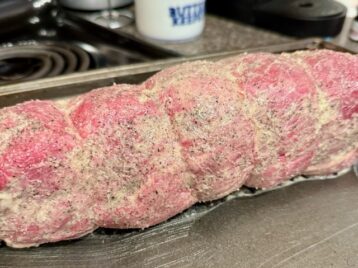
- Place the filet on a sheet pan and pat it dry (all over) with paper towels. Place on a raised grid on a sheet pan (optional) and inset a probe thermometer. Set the probe to 125°F degrees in the center for rare and 130°F degrees for medium-rare.

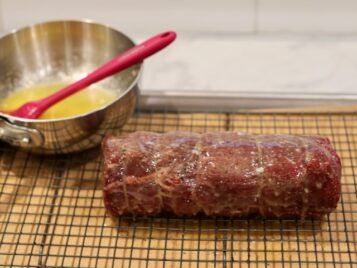
- Option 1: Sprinkle all over with the salt and pepper. Baste entirely with melted butter.
- Option 2: Sprinkle all over with the salt and pepper. Smear room temperature butter all over the beef covering completely.

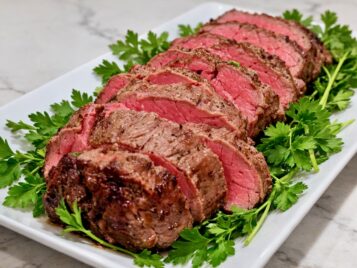
- Roast the filet of beef for about 1 1/4 to 1 1/2 hours, until the probe registers your desired temperature (Recommended 128°F). Cover the filet loosely with aluminum foil and allow to rest for 20 minutes. Remove strings, slice thickly and serve warm or at room temperature.
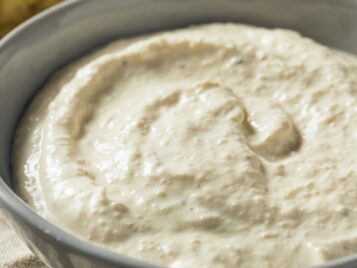
- Recommended: Serve with Homemade Classic Horseradish Cream Sauce.
Notes
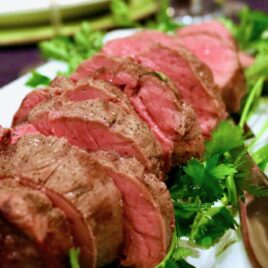
Ina Garten’s Slow Roasted Beef Tenderloin with Tarragon
Ingredients
- 1 4 -4.5 lb whole filet of beef tenderloin- trimmed and tied
- 3 tbsp good olive oil
- 4 tsp kosher salt (other types of salt will need qty adjustment)
- 2 tsp coarsely ground black pepper
- 15-20 branches fresh tarragon
Instructions
- Preheat the oven to 275°F degrees.
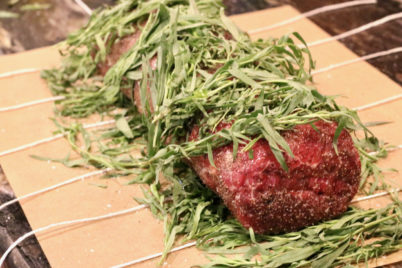
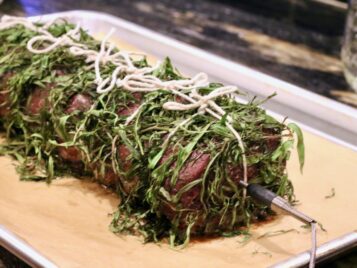
- Place the filet on a sheet pan and pat it dry (all over) with paper towels. Brush the filet all over with the oil, reserving about half a tablespoon. Sprinkle it all over with the salt and pepper. Place the tarragon branches around the beef, tying them in 4 or 5 places with kitchen twine to keep them in place, and then brush the tarragon with the reserved oil.

- Insert a Probe Thermometer and Roast the filet of beef for about 1 1/4 to 1 1/2 hours, until the temperature registers 125-130°F degrees in the center for rare and 130-135°F degrees for medium-rare.
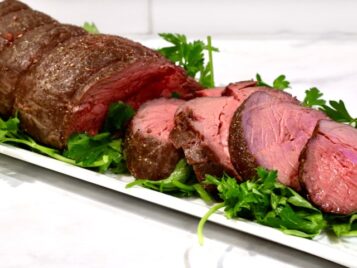
- Cover the filet with aluminum foil and allow to rest for 20 minutes. Remove tarragon & strings, slice thickly and serve warm or at room temperature.
- Recommended: Serve with Basil Parmesan Sauce or Classic Horseradish Cream Sauce.
What readers are saying about Ina Garten’s Slow Roasted Beef Tenderloin Recipe
Was lucky enough to source a beautiful cut of beef. Followed recipe exactly with butter, salt and pepper. Cooked till 130, let it rest and it was like cutting into butter.
My husband recently got an unexpected promotion and I hosted a small gathering to celebrate with our family and wanted to make something extra special. This beef tenderloin turned out perfect- I received so many complements and it was totally manageable. (I already had the temperature probe so this reminded me to use it.)
I appreciated all the extra tips. I let the roast come to room temperature and rested it properly before serving. It was easily one of the best beef tenderloins I’ve ever made.
can you cook a roast beef uncovered
Hello Bob!
Yes, you can absolutely cook beef tenderloin uncovered. Its all about the slow roasting process here that truly makes this recipe a winner. How you treat the meat is ultimate just preference.
Please let me know if I can answer any other questions! Happy Feasting!
Cheers,
Chrissy
Served this for New Year’s Eve with roasted potatoes and asparagus. It looked beautiful on the table and sliced like butter. Everyone kept asking for the recipe.
This was my first time making beef tenderloin (and hosting Christmas dinner) and I was so nervous. Your instructions were easy to follow and the thermometer temperatures came out perfect medium rare and dinner was a success!
The thermometer is so important. This recipe is staying in our holiday rotation.
Made this for Christmas dinner and it turned out incredible. I used the herb butter version and served it with the horseradish cream sauce. There wasn’t a single slice left by the end of the night.
Absolutely delicious. The horseradish sauce was amazing with the beef.
this was honestly restaurant quality.
Best beef tenderloin I’ve ever made. The horseradish sauce is a must!