
Ina Garten’s Roast Chicken is quite simply the most beautifully cooked, best roast chicken recipe — and the only recipe you’ll ever need for what many consider the ultimate comfort food.
Cooking by temperature, not time, ensures juicy white meat, tender, flavorful dark meat, and crisp golden skin every single time. As it roasts, the aroma fills the house with that unmistakable, deeply comforting scent of home. Beneath the chicken, the vegetables slowly caramelize in the drippings, becoming rich, savory, and far more delicious than you might expect. A classic for a reason, and a method you will return to again and again.
Why is Ina Garten’s Roast Chicken so popular? (aka the BEST roast chicken recipe)
This recipe produces consistently excellent results. It just takes a good chicken, properly dried skin, simple seasoning, and adequate rest time. The vegetables cook in the same pan and become richly caramelized and deeply flavorful without requiring any extra effort. It’s literally a perfect roast chicken.
When is roast chicken done? (What temperature do you cook roast chicken to?)
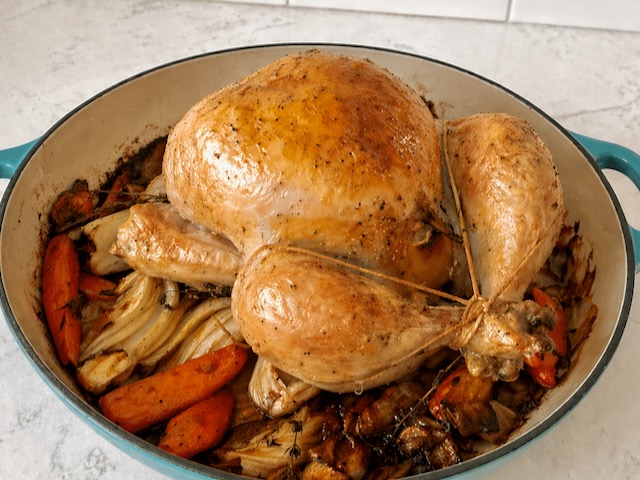
White meat should reach approximately 160°F before resting to reach 165°F, while dark meat benefits from reaching 180°F for optimal tenderness. But how do you accomplish that?
How long do you roast a chicken for?
While many recipes will call for about 1.h hours, but time alone cannot account for the many variables involved in roasting. You need to cook to temp, not to time if you want to achieve perfect roast chicken.
Ovens vary in accuracy, chickens differ in size and composition, and the starting temperature of the meat can significantly affect cooking time.
Factors that influence cooking speed include:
- oven calibration
- size and density of the chicken
- whether the chicken is fully chilled or closer to room temperature
- roasting pan material and height of pan sides
- air circulation within the oven
Monitoring internal temperature removes uncertainty and creates consistent results every time.
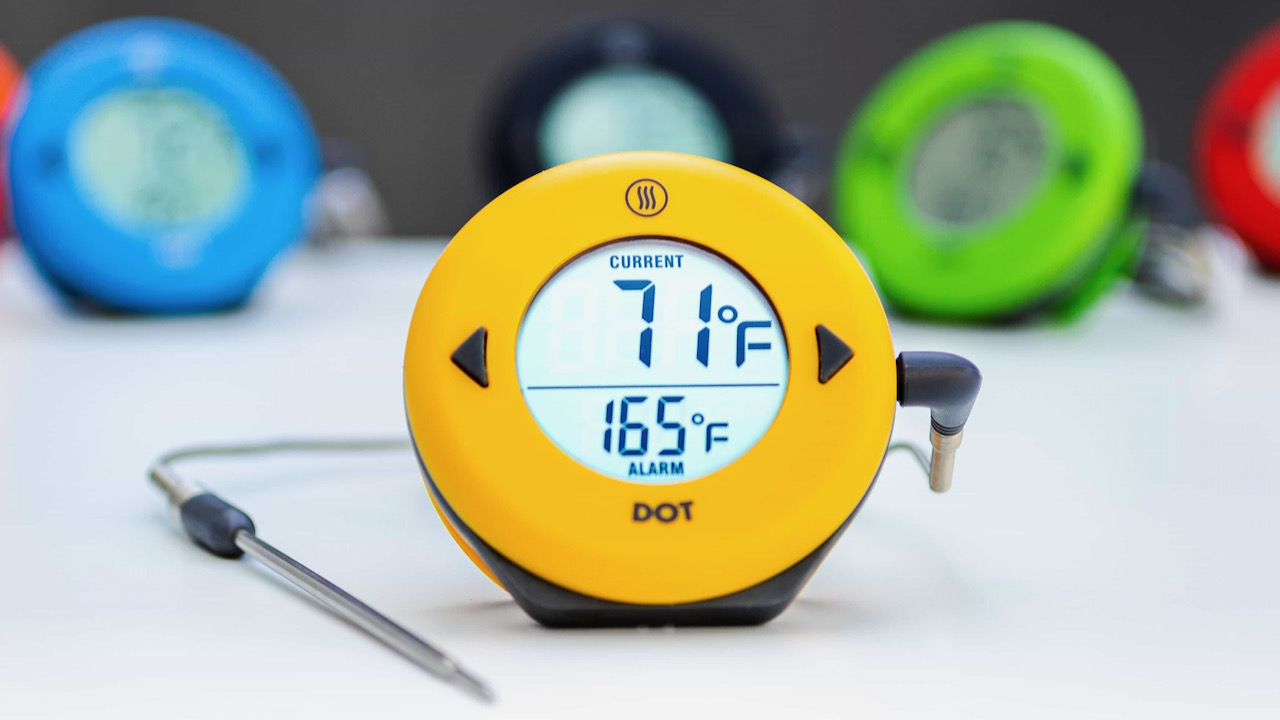
Achieve perfect Temperatures
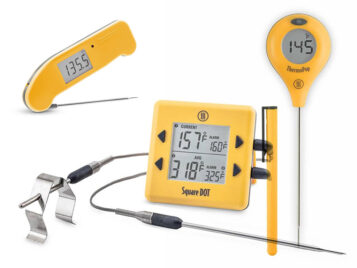
Never again over or undercook anything. A Dot takes all the guess work out of cooking. Buy two (often on sale) so you can monitor multiple items or white and dark meat simultaneously. You won’t regret it.
How to get white and dark meat to cook at different temperatures (The secret to perfect roast chicken…and turkey)
Chicken contains two types of meat — white and dark — and they finish cooking at different temperatures. White meat is best at about 165°F, while dark meat becomes tender and flavorful closer to 180–185°F. So how do you cook one chicken and get both to their ideal temperature? It sounds impossible, but it isn’t.
The key is using two probes to monitor temperature, such as using two Thermoworks Dots which allows you to monitor two areas of meat at once.One probe goes in the breast and one in the thigh, removing the guesswork. There are simply too many variables — oven accuracy, chicken size, starting temperature — to rely on timing alone. Temperature is what gives you consistent results.
From there, you can use one of the two techniques below (or a combination of both) to help the dark meat and white meat cook evenly so the entire chicken turns out exactly as it should.
Technique 1: Ice the chicken breasts to give the dark meat a head start
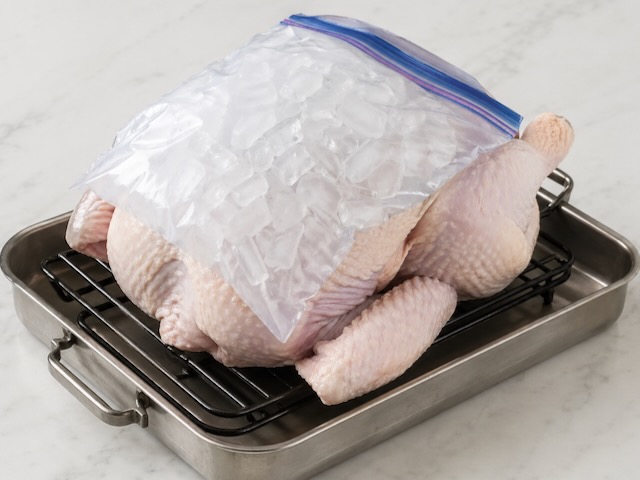
One helpful technique is allowing the dark meat to warm slightly before roasting while keeping the breasts cooler.
Remove the chicken from the refrigerator 30–45 minutes before cooking. While the chicken rests, place small sealed bags of ice over the breast area. This keeps the white meat slightly cooler while the thighs and legs move closer to room temperature.
This subtle temperature difference allows the dark meat to cook more efficiently without overcooking the breast.
It is a simple adjustment that can significantly improve the final texture.
Technique 2: Use a Foil Shield to slow the cooking of the white meat
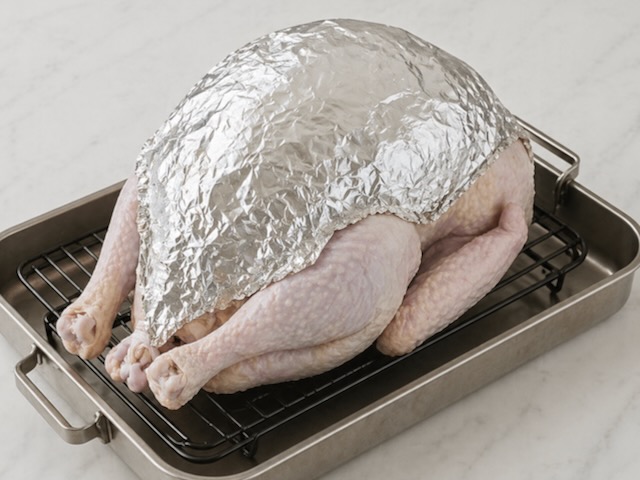
If you don’t have time for pre-chilling the breasts, a simple foil shield works beautifully.
Shape a piece of foil to the breast portion of the chicken. Leave the legs exposed. This slows down the cooking of the breast portion of the chicken, which is the white meat.
Roast the chicken with the foil shield in place for approximately 25–30 minutes. Then remove the foil and allow the skin to brown while the chicken finishes cooking.
This protects the white meat during the early stage of roasting, allowing the dark meat to catch up in temperature.
Never Skip the Rest Time!
Resting is one of the most important steps in achieving a juicy roast chicken.
Allow the chicken to rest for at least 20 minutes before carving, 30 if possible. Resting allows juices to redistribute throughout the meat rather than spilling onto the cutting board.
The chicken will remain warm for up to 40 minutes, and the texture improves significantly with proper resting time.
Resting also gives the vegetables additional time to absorb flavor from the roasting pan.
Helpful Tips for How to Roast a Chicken — Perfectly.
- choose the best quality chicken available
- pat the skin completely dry before seasoning
- salt generously for proper flavor development
- insert thermometer probes before placing in the oven
- Use a low rimmed baking pan to increase air exposure to the dark meat
- allow adequate resting time before carving
- cook according to temperature rather than time
What temperature should roast chicken be cooked to?
White meat should reach approximately 160°F before resting, while dark meat benefits from reaching 175–180°F for optimal tenderness.
Is it safe to roast vegetables in the same pan as the chicken?
Yes. Vegetables roasted beneath the chicken absorb flavorful drippings and become deeply caramelized.
How long should roast chicken rest before carving?
Allow the chicken to rest at least 20 minutes and up to 40 minutes for best texture and moisture retention.
Do I need a thermometer to roast chicken?
A probe thermometer like the Thermoworks Square Dot is the most reliable way to ensure both white and dark meat cook to their ideal temperatures without drying out.
What to serve with Roasted Chicken?
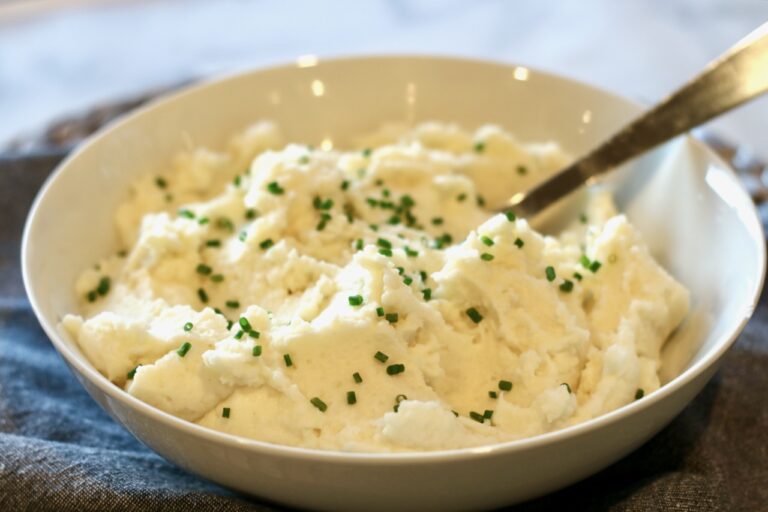
Mashed Potatoes worked perfectly here. It’s a classic combination for a reason.
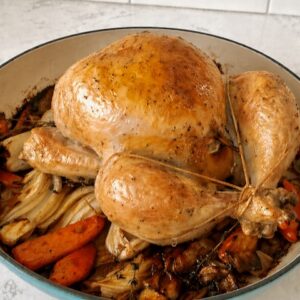
Ina Garten’s Roast Chicken (Perfect every time)
Equipment
- Probe thermometer (recommended: Thermoworks Square Dot with 2 probes)
- Shallow baking dish (tall sides prevent thighs from cooking and browning)
Ingredients
- 1 5 to 6 pound roasting chicken
- Kosher salt
- Freshly ground black pepper
- 1 large bunch fresh thyme plus 20 sprigs
- 1 lemon halved
- 1 head garlic cut in half crosswise
- 2 tablespoons 1/4 stick butter, melted
- 1 large yellow onion thickly sliced
- 4 carrots cut into 2-inch chunks (sliced on a diagonal)
- 1 bulb of fennel tops removed, and cut into wedges
- Olive oil
Instructions
- Preheat the oven to 425° F.
- Remove the chicken giblets. Remove any excess fat and leftover pin feathers and pat the outside dry.
- Either chill the breasts with ice packs for 30 minutes or make a foil shield for the breasts to slow the cooking of the white meat. (See note in article above)
- Liberally salt and pepper the inside of the chicken. Stuff the cavity with the bunch of thyme, both halves of lemon, and all the garlic.
- Tie the legs together with kitchen string and tuck the wing tips under the body of the chicken. Brush the outside of the chicken with the butter and sprinkle again with salt and pepper.
- If available, insert a probe thermometer into the deepest part of the breast and another into the thigh of the chicken. Set the breast probe to 160°F and the thigh probe to 185°F. If using a shaped foil shield to slow the breast cooking, cover the breasts now and leave on for the first 25-30 minutes of cooking and then remove. The temperatures should now catch up to each other's finishing times.
- Place the onions, carrots, and fennel in a roasting pan. Toss with salt, pepper, 20 sprigs of thyme, and about 2 tbsp of olive oil. Spread around the bottom of a shallow roasting pan and place the chicken on top.
- Remove the chicken from the oven and let rest for a minimum of 20 minutes and up to 40 minutes. (it will stay hot and keep cooking)
- Slice and serve with the vegetables and drippings
Notes
What readers are saying about Ina Garten’s Roast Chicken
I’ve roasted a lot of chickens over the years, but this is the first one where every part turned out exactly right. The breast meat stayed juicy, the skin was beautifully crisp, and the vegetables underneath soaked up all those amazing pan juices. This is definitely going into my Sunday roast rotation.
I made this from Ina’s cookbook before and I agree- its perfect roast chicken.
My boyfriend and I couldn’t decide what was better- The chicken or the vegetables or the smell of the chicken cooking. I will never use another roasted chicken recipe again!
Would this still work with a smaller four-pound chicken? I’m worried about overcooking it.
My husband actually asked if we could make it again next weekend.
The fennel had me a little freaked out. I’ve never really liked the flavor (or so I thought!) But in this recipe, it completely won me over. Loved it!
The roast chicken dinner was fantastic, but the leftovers might have been even better. We made chicken salad for lunch the next day and used the carcass to make homemade stock. Nothing went to waste.