

For years, I cooked by the clock, the recipe, and look and feel. Sometimes it worked. Often it didn’t, and nothing made me more anxious than an expensive beef tenderloin, a timer, and crossed fingers.
A leave in probe thermometer ended the guessing. The probe goes into the center of the meat before it goes in the oven and stays there the whole time, with a thin cable running out to a display on the counter. You can watch the temperature climb without opening the oven door, and an alarm tells you the moment it’s done.
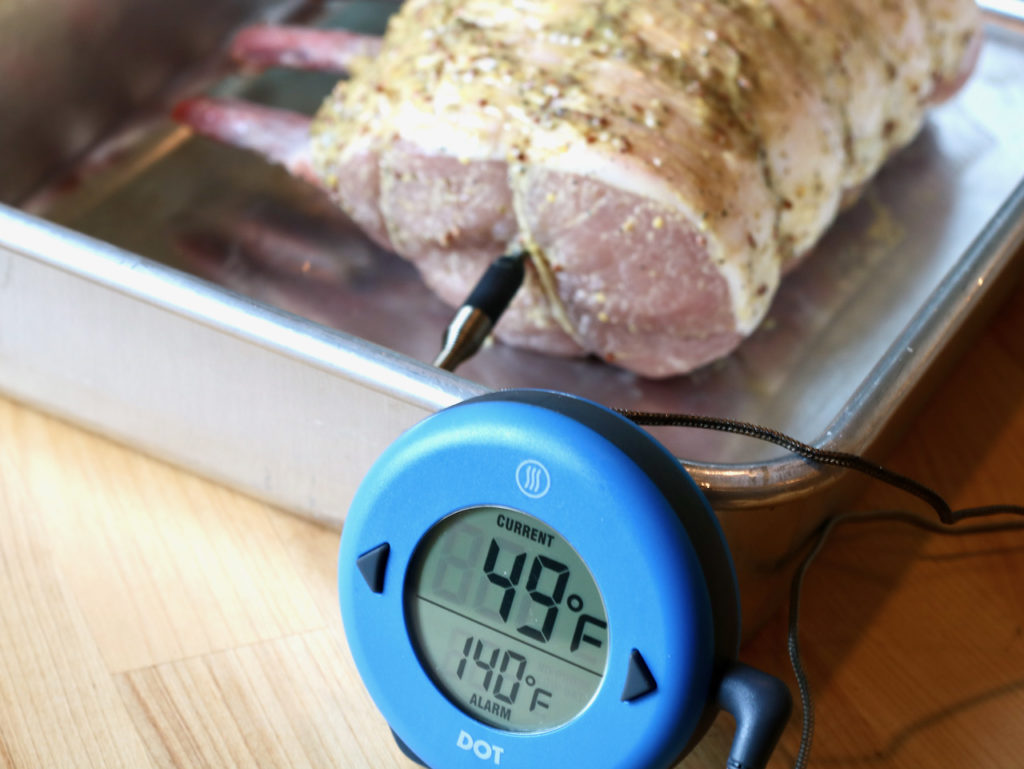
Why You Need a Leave In Probe Thermometer
Because cooking time is only an estimate, and temperature is the truth. A recipe’s timing can’t know how your oven runs, how cold the meat was going in, its size and shape, whether it has a bone, or how full the oven is. A probe thermometer takes all of that off the table.
It also protects what you’ve put into the meal: a good cut of meat and the afternoon spent preparing it. Mine has paid for itself and then some.
If you’re ready to stop guessing, the Thermoworks DOT® is the one I use and recommend.
What Can You Use a Probe Thermometer For?
Just about anything where temperature matters, which is nearly everything. Here’s how I use mine:
- Beef, pork, and chicken roasts, like my slow-roasted beef tenderloin and perfect roast chicken.
- Pork tenderloin, like my cider roasted pork tenderloin.
- Whole chickens, turkeys, and turkey breast.
- Ribs, brisket, and chicken thighs, where hitting the right temperature means fall-apart tender
- Reverse-seared steaks and pork chops
- Roasted salmon and other thick fish
- Frying oil, so everything comes out crisp, never greasy
Leave-In vs. Instant-Read: Which Do You Need?
If you’re only buying one, start with a leave-in probe. It watches the temperature the entire time, which is exactly what you want for the cooks that matter most, like a holiday roast or a whole bird.
That said, I own both. The DOT® stays in the meat from start to finish. My Thermapen One gives a reading in seconds, and I use it to check different spots in a roast, for small things that cook too fast to bother with a probe, on a grill that’s too hot to leave a probe in, and most of all as a gut check before anything comes off the heat.
The probe does the watching. The instant-read does the double-checking.
How to Use a Meat Thermometer
Put the probe in the thickest part of the meat, set your target a few degrees below where you want to finish, and pull it when the alarm sounds.
- Insert the probe before the meat goes in the oven (see where, below).
- Run the cable out the oven door. It’s made to close right in the seal. Just keep it away from the heating element or an open flame.
- Set your target a few degrees below your finished temperature, since meat keeps cooking as it rests.
- Walk away. Watching the temperature climb also tells you roughly how much time is left, so you can time your sides.
- Pull it when the alarm sounds, then gut check a second spot with an instant-read before slicing.

Where to Put a Meat Thermometer
In the thickest part, with the tip in the very center and away from bone, fat, and gristle, which all throw off the reading. For roasts, steaks, and chops, come in from the side. For a whole chicken or turkey, go into the thickest part of the breast.
Pro Tip: Roasting a chicken or a turkey? Two probes come in handy, one in the white meat and one in the dark, since they finish at different temperatures. Here are my tips for getting both perfectly cooked at the same time.
What is Carryover Cooking and Why You Pull It Early
Meat keeps cooking after it leaves the oven, as heat from the hotter outside keeps moving toward the center. That’s carryover cooking, and it’s why you always pull meat a few degrees before your target. The bigger the roast, the more it climbs.
In my kitchen, a beef tenderloin pulled at 126°F rests up to a perfect medium-rare of about 130 to 132°F. A bone-in pork roast pulled at 140°F climbs to 145°F or more.
How long do you rest meat for?
Resting finishes the cooking and keeps the juices in the meat instead of on the cutting board. I rest pork roasts for at least 20 minutes, and a turkey for at least an hour, often two. It’s still piping hot when I carve it, and incredibly juicy. Tent it loosely with foil and leave it alone.
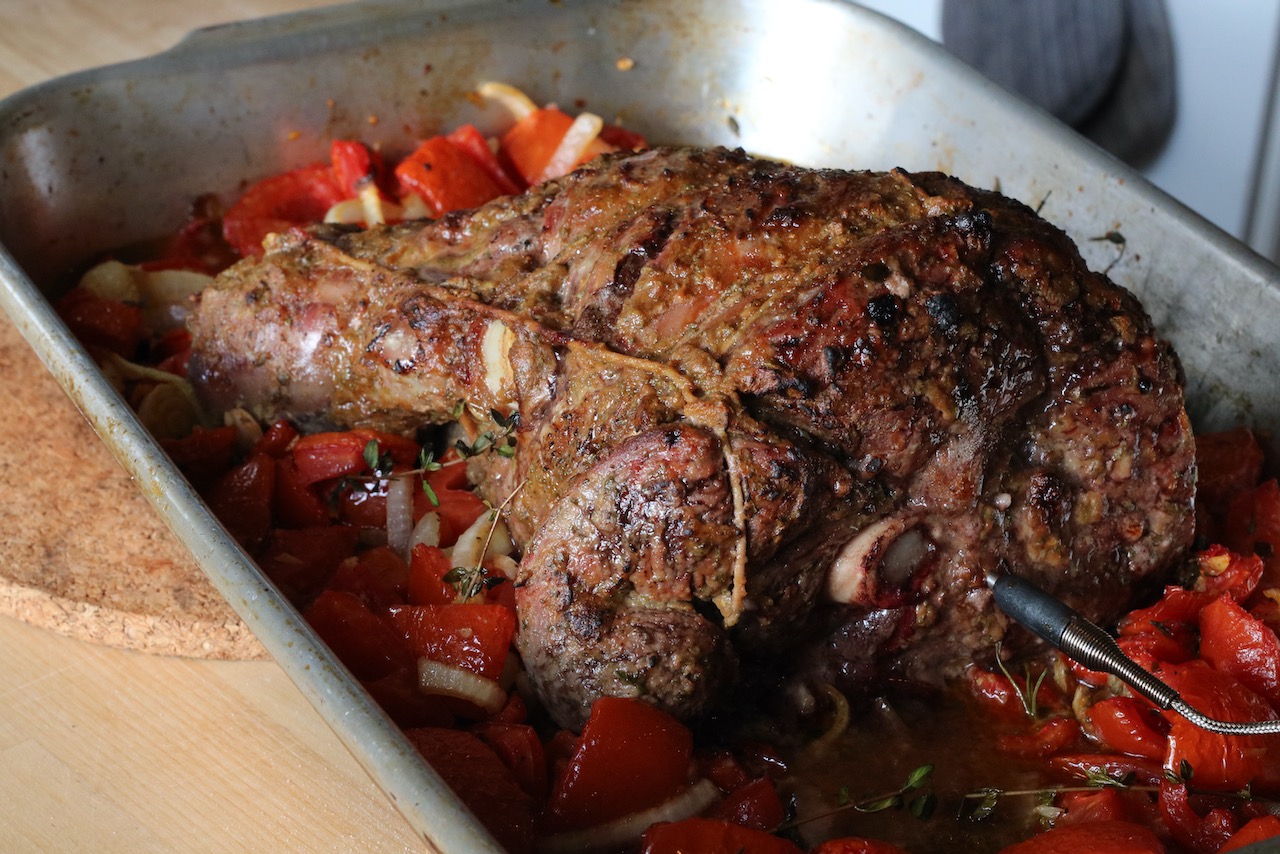
How do you know hot hot oil is for frying?
A probe thermometer is just as essential for frying as it is for roasting. Oil temperature drops the moment food hits the pot, and you can’t adjust the heat if you don’t know where it stands. Too low, and everything turns out greasy and soggy. Too high, and it burns before it cooks through. To keep the probe in the oil, you need a clip on the side of the pot.
Read my guide to the secrets of successful frying. Hint- it involves a probe!
My Favorite Thermoworks Thermometer (and Why I Own Three)
After a cheap Amazon version and my range’s built-in probe both let me down, I invested in The DOT®, which was was my first Thermoworks thermometer. Its first job was a beef tenderloin– a special occassion and expensive investment and I couldn’t afford to get it wrong. Because of the The DOT®, it came out perfect, and I ordered two more that week. Having several means I can track two roasts, or two levels of doneness, at once.
I’ve since gifted them to my family, including my mom, (who cooks everything until it’s dry as a bone) before declaring it’s done. (Sorry, Mom!) Now, even she’s a convert.
What’s in my kitchen:
- Thermoworks DOT®: my everyday leave-in probe.
- Thermoworks Square DOT®: two probes on one display.
- Thermapen One: my instant-read gut check.
- Silicone probe clip: for frying.
Do I really need a meat thermometer?
If you cook anything where doneness matters, yes. Cooking times are only estimates. A thermometer tells you exactly when meat is done, so you never serve it underdone or dried out.
Can you leave a meat thermometer in the oven?
Only if it’s made for it. A leave-in probe like the Thermoworks DOT® is designed to stay in the meat the whole time it cooks, with the display safely outside the oven. An instant-read thermometer should only go in for a quick reading.
How do you test a meat thermometer for accuracy?
Use an ice bath. Fill a glass to the top with ice, add cold water, stir, and wait a minute. Place the probe in the center of the glass without touching the sides or bottom. It should read 32°F.
Why does my meat thermometer read different temperatures?
Because meat doesn’t cook evenly. The thickest part takes longest, and bone, fat, and gristle all throw off the reading. Always go by the very center of the thickest part, and gut check a second spot with an instant-read.
Can I use a probe thermometer for frying?
Absolutely. I never fry without one. Clip the probe to the side of the pot so it sits in the oil, and you’ll always know when to adjust the heat.