
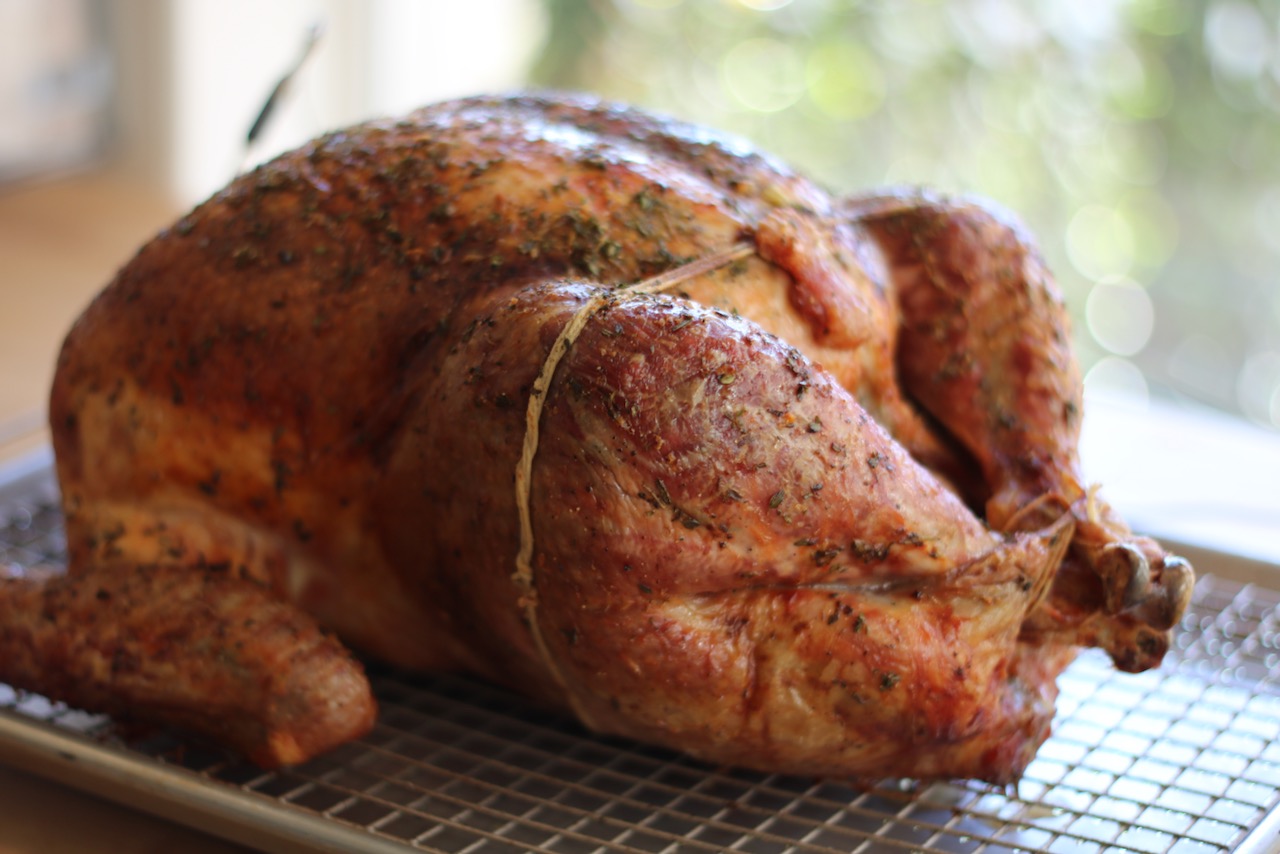
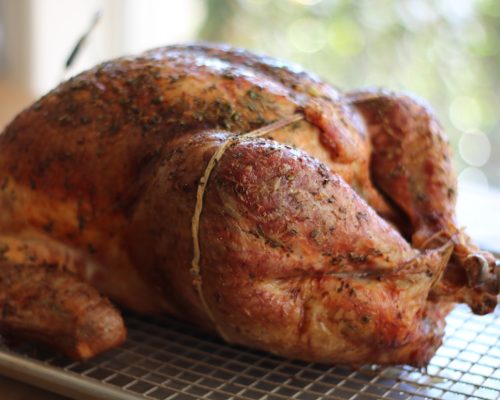
The secret to a perfect roast turkey isn’t the recipe. It’s temperature, rest time, and a few very important tricks.
A perfect roast turkey is recognizing it is really two cooks in one. White meat and dark meat finish at different temperatures, so being aware of this challenge is really what separates a mediocre turkey from a great one. You need a probe thermometer but a single probe only tells you half the story. I either use two Thermoworks DOT®s or one Thermoworks Square DOT®, which runs two probes from one display. I put one probe in the thickest part of the breast and one in the thigh- this at least arms you with data. But we aren’t done yet.
How Do You Know When a Turkey Is Done?
Temperature, not time, is the only way you can accurately know when a turkey is done (or any roast.) So the first thing you need is a reliable probe thermometer to be able to monitor the temperature of the turkey at all times.

How to Keep Turkey Moist (and Get White and Dark Meat Done at the Same Time)
To get a turkey (or a chicken) to cook evenly and have the white and dark meat be ready at the same time, use ice packs to chill the breasts. I know it sounds crazy, but it really works!
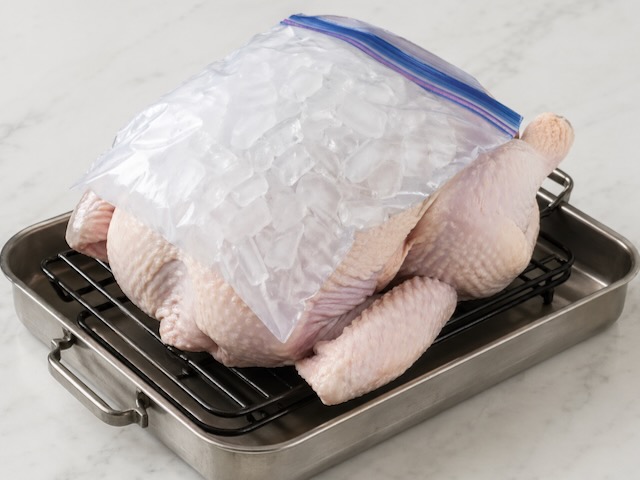
Monitoring is great, but it doesn’t solve the problem of how to achieve two very different temps at the exact same time. In order to achieve different temperature, we need to slow the cooking time of the white meat. To do this, remove the bird from the fridge up to 4 hours before roasting. Cover the breasts with ziplock bags filled with ice, held together with a clip.
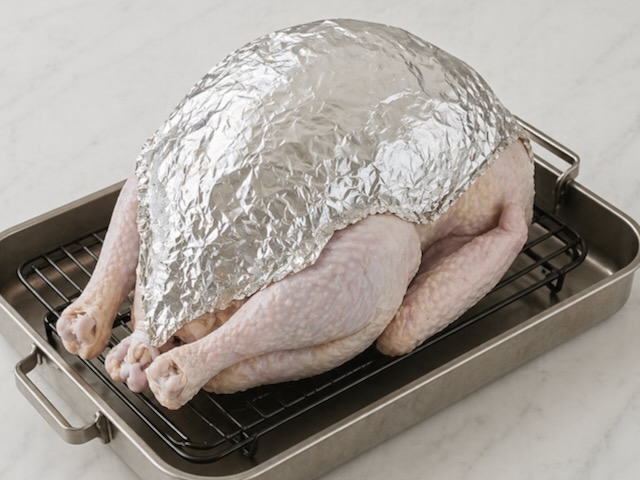
Icing down the breasts allows the legs, thighs and wings to come up to room temperature while the breasts chill. This results in a cook time lag on the breast meat of about 20-30 degrees during roasting. (Using a tin foil shield on the breasts in addition also helps control and slow the cooking of the breasts.)
The chilled breast meat will allow you to pull the turkey out of the oven when the white meat probe hits 157°F and the dark meat probe registers around 175°F- 180°F, bringing them as close as possible to their individual goal temperatures of 165°F and 185°F after rest time.
How long to rest a turkey
More time than you think. Rest your turkey for at least 1 hour and up to 2 hours.
Yup, I said it! At least one hour. Once removed from the oven, the temperature will continue to rise up to 10 additional degrees and I promise you, the bird will stay hot! It is super insulated, and the longer it rests, the better it will be! I lean towards the better part of two hours and never regret it.
Use a Sheet Pan for a Perfect Roast Turkey
Ditch the traditional roasting pan and opt for a sheet pan. A high sided roasting pan doesn’t allow hot air to reach the part of the turkey that needs hot air to reach it the most. Instead, use a V-shaped rack set inside a sheet pan which allows the thighs to be lifted and hot air to circulate around them, or a sheet pan with a raised grid which also allows air to move evenly around the roast. Otherwise, you will end up with an over browned top, and a slower cooked and uncrispy bottom.
If you are looking for an even more detailed guide of turkey dos and don’ts, especially in regards to temperature, check out this blog post from Thermoworks.
How to temp a turkey
Use two probes: one in the thickest part of the breast and one in the innermost part of the thigh. White meat and dark meat finish at different temperatures, and a single probe only tells you half the story. According to the USDA, a whole turkey is safe once it reaches 165°F in the thickest part of the breast and the innermost part of the thigh and wing. Read USDA’s article, Let’s Talk Turkey. However… the temperature WILL keep rising so I pull it at 157°F and will exceed the 165°F, so if you don’t pull it early enough, it will over cook the breast meat.
Here’s how I do it:
- Breast probe. Insert it into the thickest part of the breast, coming in from the neck end, and stop before you hit bone.
- Thigh probe. Insert it into the innermost part of the thigh, near where it meets the body, again without touching bone.
- Set each target. I set the breast to 157°F and the thigh to 180°F.
- Watch the breast. White meat dries out first, so the breast alarm is usually the one that tells you when to pull the bird.
- Rest it. At least an hour, often two. (Yes, really. The bones keep it very hot and the moisture stays in. It’s a pro tip.)
Two Dots work perfectly for this, or Square DOT®, which runs two probes from one display. Important note- If you buy a Square DOT® you need to order an extra probe. Alternatively, buy two individual Dots®.
Perfect Roast Turkey FAQs
How many days does it take a turkey to thaw in the fridge?
Plan on about 24 hours for every 4 to 5 pounds: one to three days for a 4–12 lb bird, three to four days for 12–16 lb, four to five days for 16–20 lb, and five to six days for 20–24 lb. Once thawed, it can wait in the fridge for one to two days before cooking. Make sure it’s completely thawed. A frozen center cooks unevenly and can fool your thermometer. Better yet, skip the thawing altogether: order a fresh, never-frozen turkey from a butcher you trust, and order early.
How much turkey do you need per person?
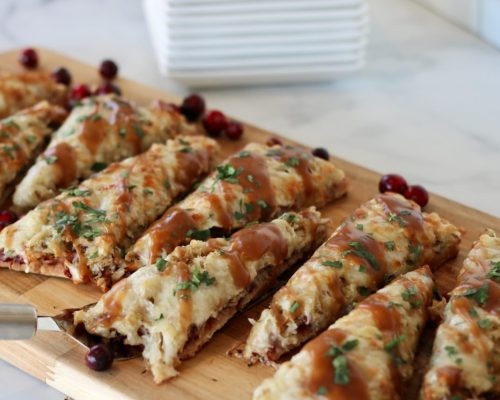
One pound per person is plenty, especially with a table full of sides. But always plan for leftovers. If you want enough for sandwiches the next day, or my Thanksgiving Leftovers Pizza, buy a little bigger than your headcount.
Should you brine a turkey?
I don’t, but I understand why people do, and I know plenty of cooks who swear by it. I order my turkey months ahead from a butcher I trust, so it’s as fresh as it gets, and I’m not trying to change its flavor. If you’re buying a supermarket turkey, check the label first. Many are already “enhanced” or “self-basting,” meaning they’ve been injected with a salt solution, and brining them again can make the meat too salty.
Should you cover a turkey when roasting?
Yes, especially at the beginning. A foil shield over the breast blocks the direct heat that the dark meat needs and the white meat doesn’t. The thighs get a head start while the breast cooks more slowly. Combined with the ice-pack method, it gives your turkey the best shot at white and dark meat reaching their ideal temperatures at the same time. Remove the foil about halfway through. The breast skin is thinner and will still crisp, and if it needs a little more color, you can always give it a quick, gentle broil at the end. This is about protecting the meat, and the skin will be just fine.
Should you baste a turkey?
Honestly, I don’t. I’m not against it, I’ve just never needed it. Basting mostly flavors and browns the skin; it doesn’t make the meat juicier. What keeps a turkey moist is pulling it at the right temperature and letting it rest. Every time you open the oven to baste, heat escapes and the cook gets longer.
Should you stuff a turkey?
I don’t, and I don’t recommend it. Stuffing in the cavity slows the cook, especially for the dark meat, which already has the hardest job: it needs time at temperature for the collagen to break down. There’s a food-safety problem too: stuffing cooked inside the bird has to reach 165°F to be safe, and by the time the center gets there, the breast is usually overcooked. Bake your stuffing in the oven or make it on the stovetop, but keep it out of your bird.




What readers are saying about How to Cook a Perfect Roast Turkey
OMG I tried the ice pack trick and it really worked! Thank you, Thank you, Thank you!