
The Best Fish & Chips Recipe that brings the British Pub Classic right into your kitchen!
“Fish & Chips” is a classic British pub food that transcends borders and has captured the hearts and taste buds of countless people around the globe. Succulent fillets of fish, encased in a crispy golden batter, served alongside piping hot, perfectly cooked potato fries. Mmmm- It’s a match made in culinary heaven.
Anyone who is a true Fish and Chip lover knows that when ordering it out, disappointment is more common than satisfaction. It can almost become an obsession trying it over and over again, seeking out that perfect, crunchy bite that rarely is found. This beloved English classic has lost its way here in America, and has gone all wrong. But I was determined to figure out how to make it right.
And after testing countless fish & chip recipes, watching videos, and reading endless articles on the history of this British classic, I finally found the best fish & chips recipe that produces perfect results. If you can follow directions, you can make the best fish & chips in town!
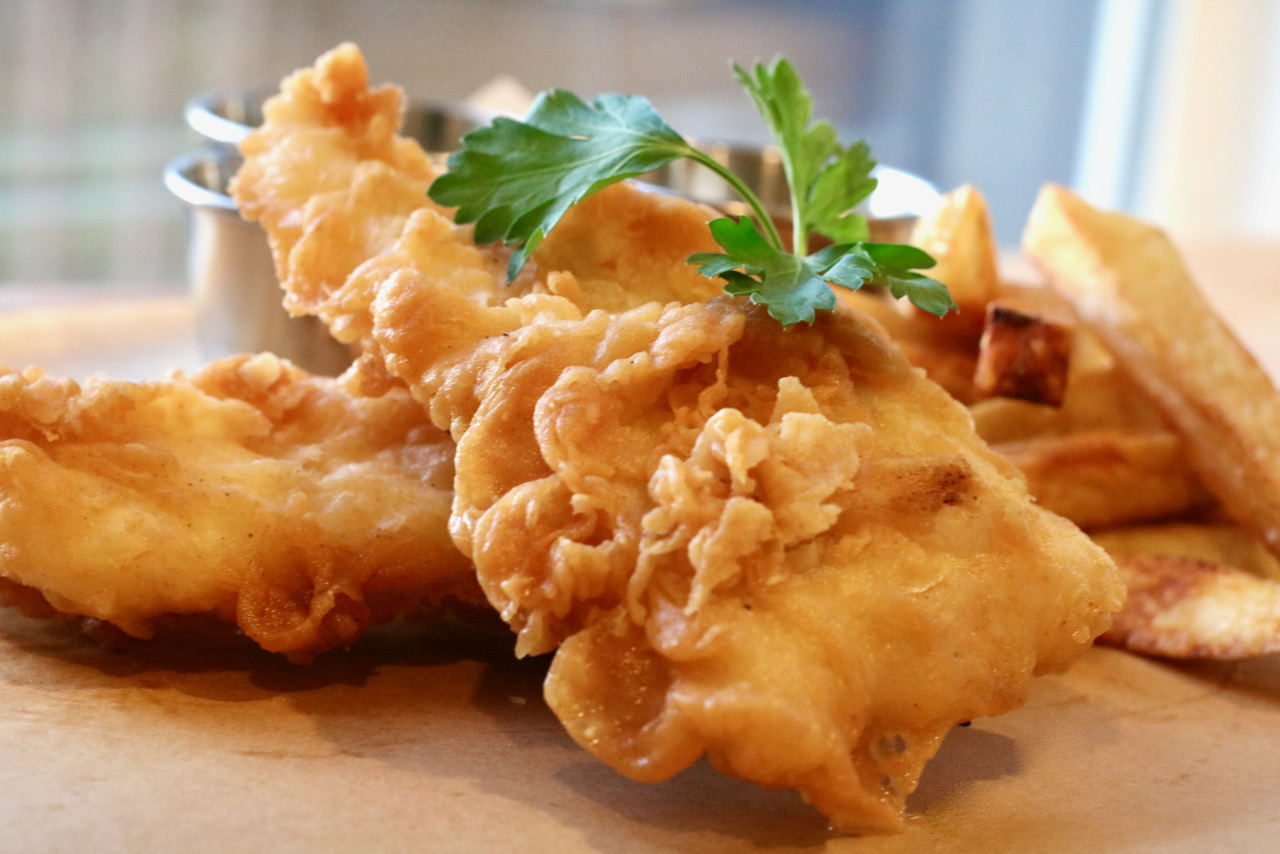
The batter is the secret to the best Fish & Chips.
The Best Fish and Chip recipe starts with a good, strong batter. The batter’s job is to encapsulate the fish to form a crust, allowing the fish to steam within the crust and never crack. If the batter is done well, no oil will ever penetrate the batter and have direct contact with the fish’s flesh. (When that happens, you get greasy, soggy fish.)
The batter mixture should be thin, yet tacky enough to cling to the fish. It needs seasoning, but not so much that it over powers the delicate flavor of the cod, or other white fish.
Once cooked, the batter should be very crispy and crunchy and not at all doughy. It should stick to the cooked fish when cutting through it, and not pull off and separate from the fish.
It should never, ever, ever be soggy or greasy.
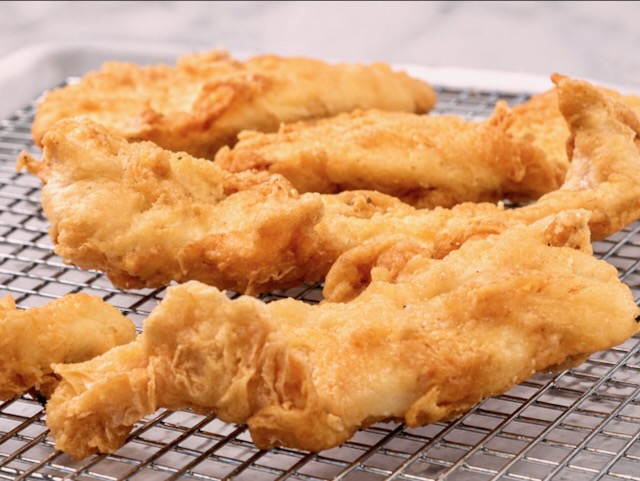
What I have learned is that there is only one way to ensure a crispy coating on the outside, and a moist, delicate fish on the inside. You have to make it yourself.
And after testing a wide variety of recipes, watching videos, and reading countless articles on the history of fish and chips, I finally found a great recipe the produces the perfect results. If you can follow directions, you can make these fish & chips.
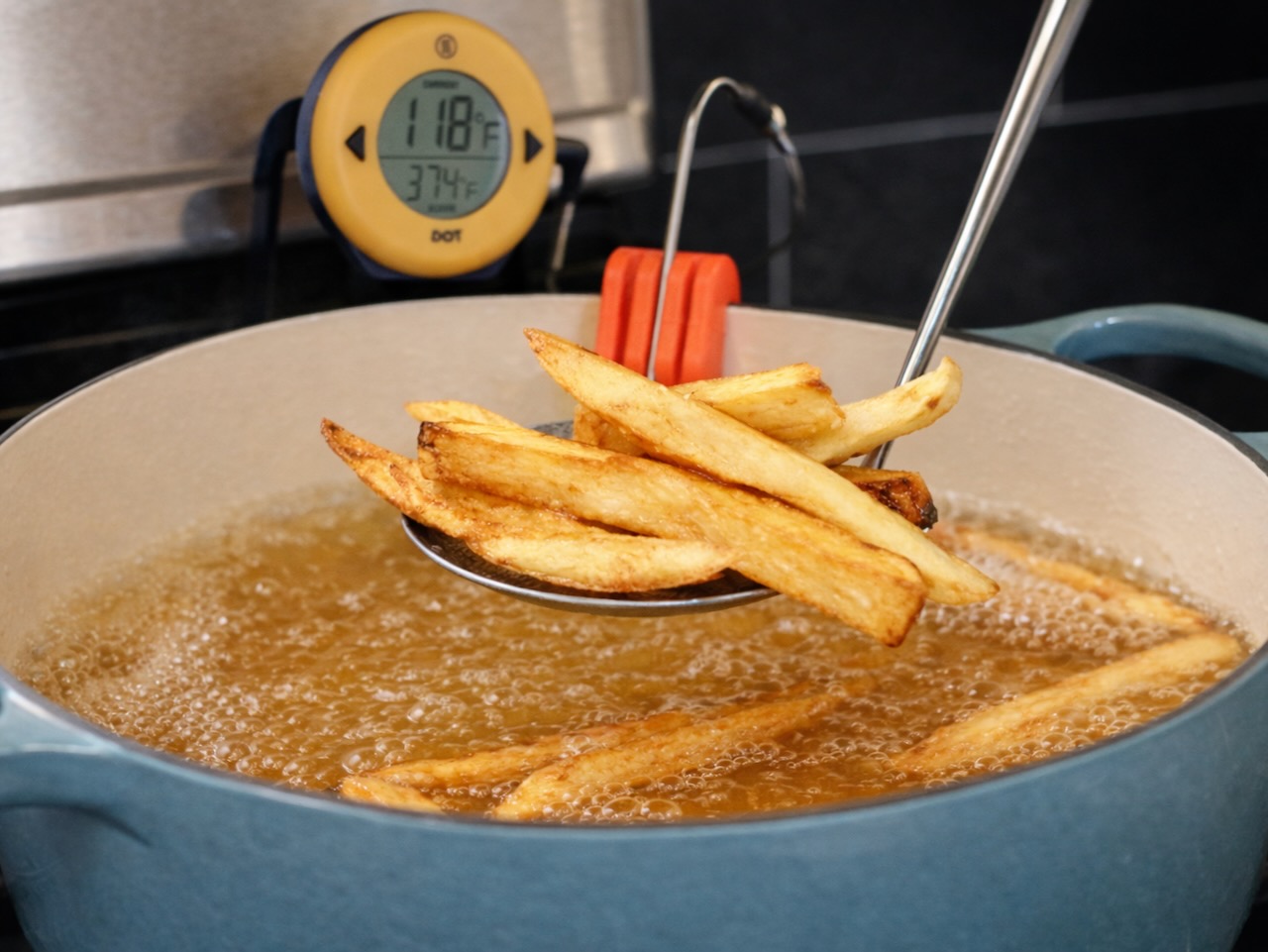
Nanny’s Traditional English Chip Recipe
My now treasured fried fish recipe comes from the America’s Test Kitchen archives, and while their fish recipe is great, the chip recipe was not up to my standards. They cook their potatoes in the microwave and this is far (very far!) from traditional. This is not what I was looking for when trying to achieve a traditional fish & chip experience. I prefer to make my chips just as I was taught from my English grandmother-in-law, Gladys. We all called her Nanny and she would want you to as well.
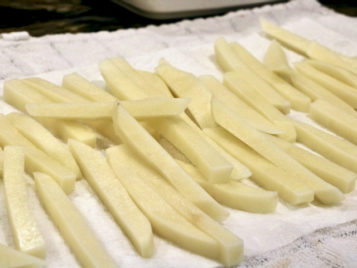
Nanny made her chips for over 90 years so why mess with perfection? Her method is rustic, and involves hand peeling the potatoes imprecisely- that is to leave some of the skin on the potato. The thickness of the chips is also imprecise, but should be about 1/2 inch thick. As a child, my husband Brett, would watch her expertly peel and cut the potatoes with a pairing knife, dropping the chips into the fresh water as they were cut, removing the starch, eagerly awaiting the time they would be fried. Nanny would then pat the chips dry on tea towels and ready them from frying.
Gladys hand style chips are simply the best. They are the right shape and thickness, and brown beautifully when fried. Don’t mess with a good thing.
When frying Fish & Chips, I prefer to work two separate pots of oil to ensure the potato flavor is not influenced by the fish oil. However, its a personal choice and I am sure many people fry both the fish and the chips in the same oil.
The Real Secret to Success is Temperature
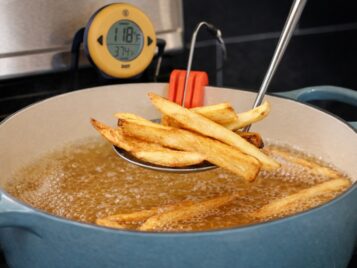
If you really want to take your frying game for fish & chips, or frying anything, to the next level, then I HIGHLY RECOMMEND getting a Thermoworks Dot and probe. This tool can be used to monitor the exact temperature of the oil throughout the cooking process, which can fluctuate greatly when frying. For example, you could set the oil temperature to 375°F, but once you drop anything into the oil, it WILL drop. Monitoring the temperature with a Dot allows you to adjust your heat control accordingly to get it back up to the right temperature and maintain it while frying until golden brown.
If frying in batches be sure to wait for the temperature to reach 375° again before dropping.
Pro Tip:
Use the Right Tools to get the Job Done Right
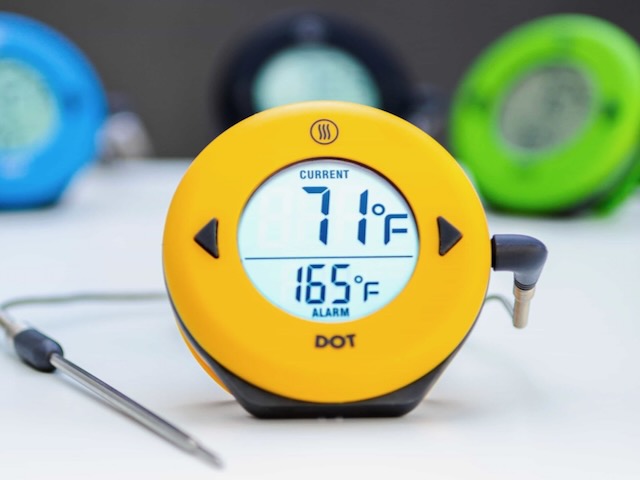
Thermoworks Dot® with Probe
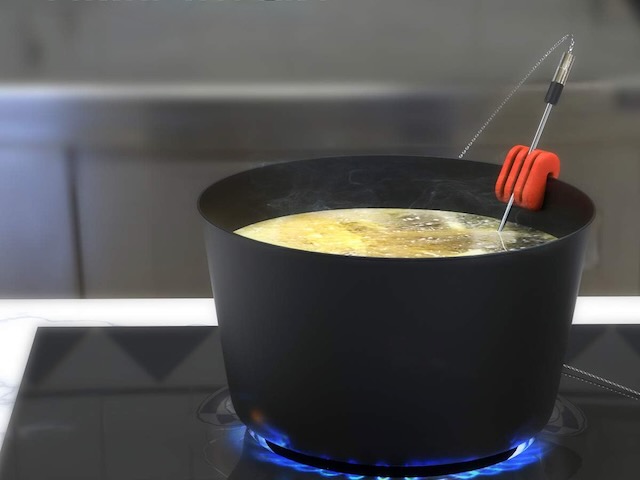
Universal Silicone Probe Holder
Fish & Chips is a very nostalgic dish and if you take a moment to read some of the comments that have been sent in from folks who have tried this recipe, you’ll start to understand how special this recipe really is.
KC
Gerry
Felicity
Alan
Shelia
Diane
Laurie
Keith
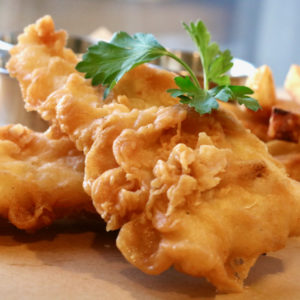
Traditional Fish & Chips
Ingredients
- 3 pounds Russet potatoes about 4 large potatoes.
- 3 quarts canola oil for frying plus 1/4 additional cup
- 3 cups all-purpose flour
- 1 cup cornstarch
- ½ teaspoon cayenne pepper
- ½ teaspoon paprika
- 1/4 teaspoon ground black pepper
- 3 tsp Diamond kosher salt
- 2 teaspoon baking powder
- 1 ½ – 2 pounds 1-inch-thick cod fillet or other thick white fish, such as hake or haddock cut into approximately 3-ounce pieces. (Thoroughly dry fish with paper towels)
- up to 3 cups beer 24 ounces, cold. (Any beer will work in this recipe, even nonalcoholic beer with the exception of dark stouts and ales.)
Instructions
1. Prep the fish
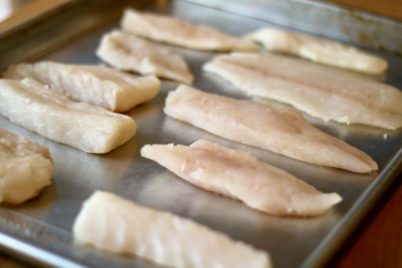
- Slice fish into your preferred size portions. I like smaller pieces, about 2 ounces per piece, but sometimes you need to follow the natural cuts of the filet. You want portions that are evenly sized as much as possible. Pat dry with paper towel and set aside in the refrigerator.

2. Prep the potatoes
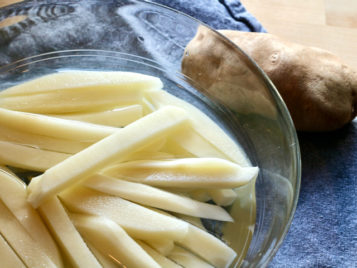
- Peel the potatoes and slice off the “top & tail” to square off the ends of the potato and discard. Cut each potatoes lengthwise into 1/2 inch fries. Add potato pieces into a water bath for about 30 minutes.

- Remove from water and pat dry with paper towel.
4. Fry the Potatoes
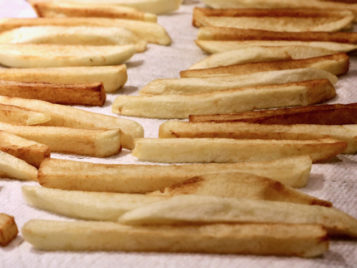
- In heavy-bottomed Dutch oven (about 7 quart capacity), heat TWO of the three quarts oil over medium heat to 350°F. Pro Tip: Use a Oil safe Probe to monitor and control temperature for perfect results. Add fries to hot oil and increase heat to high. Fry, stirring with mesh spider or slotted metal spoon, until potatoes turn light golden and just begin to brown at corners, 6 to 8 minutes.
- Transfer fries to paper towels to drain.
3. Set up the dredging station
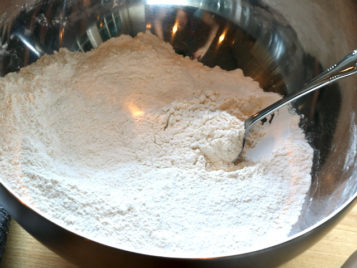
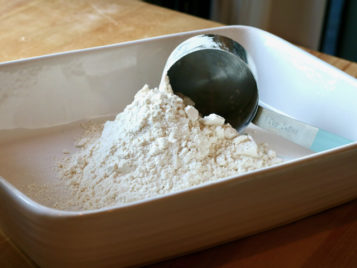
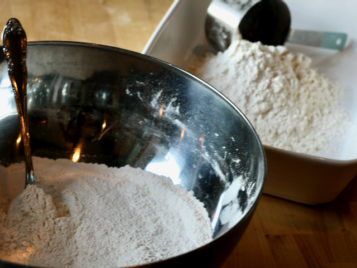
- Whisk the flour, cornstarch, cayenne, paprika, pepper, and salt in a large mixing bowl.
- Remove 1.5 of a cup of the flour mixture and add it to a casserole dish and set this flour & dish aside.
- Go back to the flour mixture that remains in the bowl and add baking powder. Whisk to combine.
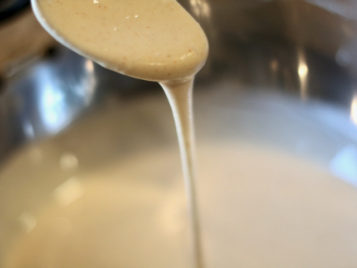
- Add 1.5 cups beer to the flour mixture in the mixing bowl and stir until mixture is just combined (batter will be lumpy). Add remaining beer as needed, 1 tablespoon at a time, whisking after each addition, until batter falls from whisk in thin, steady stream and leaves faint trail across surface of batter.
5. Dredge & fry the fish
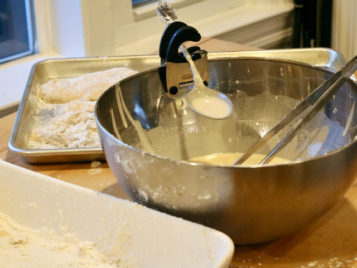
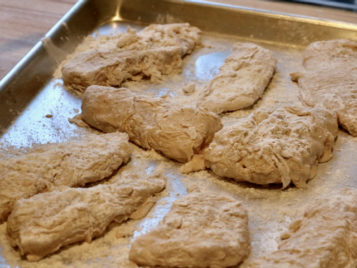
- With the fries done, increase the heat of the oil to medium-high, add remaining quart of oil if necessary and heat oil to 375°F. Pro Tip: Use a Oil safe Probe to monitor and control temperature for perfect results. (Meanwhile, thoroughly dry fish with paper towels. Dredge each piece of fish in the flour mixture shaking off excess flour. Dip 1 piece of fish in batter at a time and let excess run off, shaking gently. Place battered fish back into the casserole dish (or what ever dish you are using) with the flour mixture and turn to coat both sides. (This is messy, but worth it!)
- If you are working with a partner in the kitchen you can now add each piece directly to hot oil if or, if you choose, keep pieces in single layer on baking sheet and repeat until all pieces are coated. (It’s best if you have one person frying and another dredging. However, you can certainly do it in batches if working alone, just be careful not to let it sit too long to avoid the batter sticking to the sheet pan)
- Tip: As you add the fish, you will likely need to adjust the heat to keep it maintained at 375-385°F. Not adjusting your temperature to maintain oil temperature when frying is a common, and costly, mistake. The fish will not crisp up. But make it too high, and everything will burn. Use an oil safe thermometer for best results.
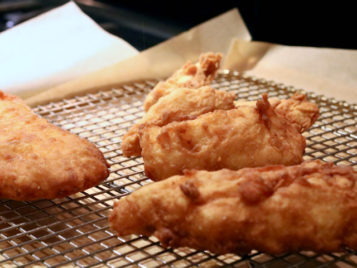
- Fry the fish, stirring occasionally, until golden brown, about 5 minutes depending on thickness. Use a kitchen spider to remove fish from hot oil and transfer fish to a sheet pan lined with a gridded cooling rack. Never walk away!
- Tip: If you are unsure about the doneness, remove one piece of fish and use an instant read thermometer to test for a minimum of 145° F.
6. Re-fry the potatoes
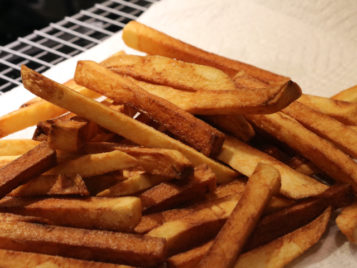
- Add the previously fried potatoes back to the hot oil for about 2 minutes to crisp up. Remove to fresh paper towel or directly to a cooking rack. Immediately sprinkle with sea salt or kosher salt.
Serve hot
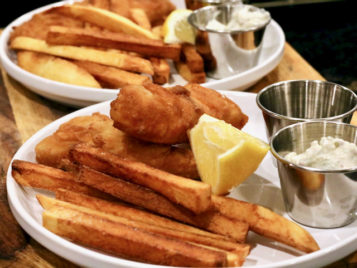
- Serve fish & chips with traditional malt vinegar and tartar sauce.
Notes



What readers are saying about The Best Fish and Chips Recipe
I am thrilled that at 73 I first challenged myself to make fish & chips! And I don’t normally like batter over breaded, but I have made this recipe EXACTLY as written and now I am a star in my family for having not only succeeded but made it so well that my fish-hating SON is now begging for me to make F&C! SO DELICIOUS! THANK YOU!
Hi Dottie,
Thank you so much for taking the time to write a note and share your experience. I can’t tell you how happy I am that you and your family enjoyed it!
Here is another simple and yummy cod dish that you may want to try: Ritz Cracker Baked Cod
Cheers,
Chrissy
this recipe was fantastic! really came out well. looking forward to trying more recipes.
Best Fish & Chips ever! Don’t reheat the fries for 2 minutes, though — that’s way too long. I will try the batter on chicken next. Thanks!
I have made this recipe several times now and it is 10/10. The fish is so flaky and the batter is so crispy if you follow the recipe exactly, the only thing I changed was I used Avacado oil. turned out perfect!!