There are so many chocolate chip cookie recipes out there- how can you choose which one to use?! So the first step is to decide what kind of cookie you are looking to make. Chewy, soft, thick, thin, chunky, cakey, crispy, salty? Once you determine what kind of cookie it is you seek, you can narrow down your recipe search.

Now, if you are looking for a thin, salty, semi-crisp chocolate chip cookie- then look no further. I’ve got you covered.
My recipe is inspired by Ina Garten’s Chocolate Chunk recipe but with the changes that helped turn it into what I consider the best recipe for me! You should do the same to make it your own! For me, I’m not a fan of big chunks of chocolate so I like to use mini chocolate chips because they melt into the cookie and are sprinkled throughout. I also only include walnuts every so often. Remember… walnuts and raisins are always optional!
The salty sweetness of this cookies is a real crowd pleaser 🙂
1cupmini semisweet chocolate chipsfeel free to add a nother handful if you like they super chocolatey
1cup chopped walnuts – optional(make sure they are fresh!)
Instructions
Sift together the flour, baking soda, and salt
Using an electric mixer like a kitchen aid, fitted with the paddle attachment, mix the butter and two sugars for about 4 minutes until very light and fluffy
Add the vanilla, then the eggs, one at a time, and mix well.
With the mixer on low speed, add the sifted flour, baking soda, and salt to the butter mixture, mixing only until combined.
Use a spatula to mix in the chocolate chips by hand.
Scoop cookies onto a cookie sheets using a cookie scoop. Dampen your hands and flatten the dough slightly. Bake for 15 minutes (the cookies will seem underdone). place cookies on a cooling rack and serve warm or cool.
After cookies have cooled completely, store in an airtight container.
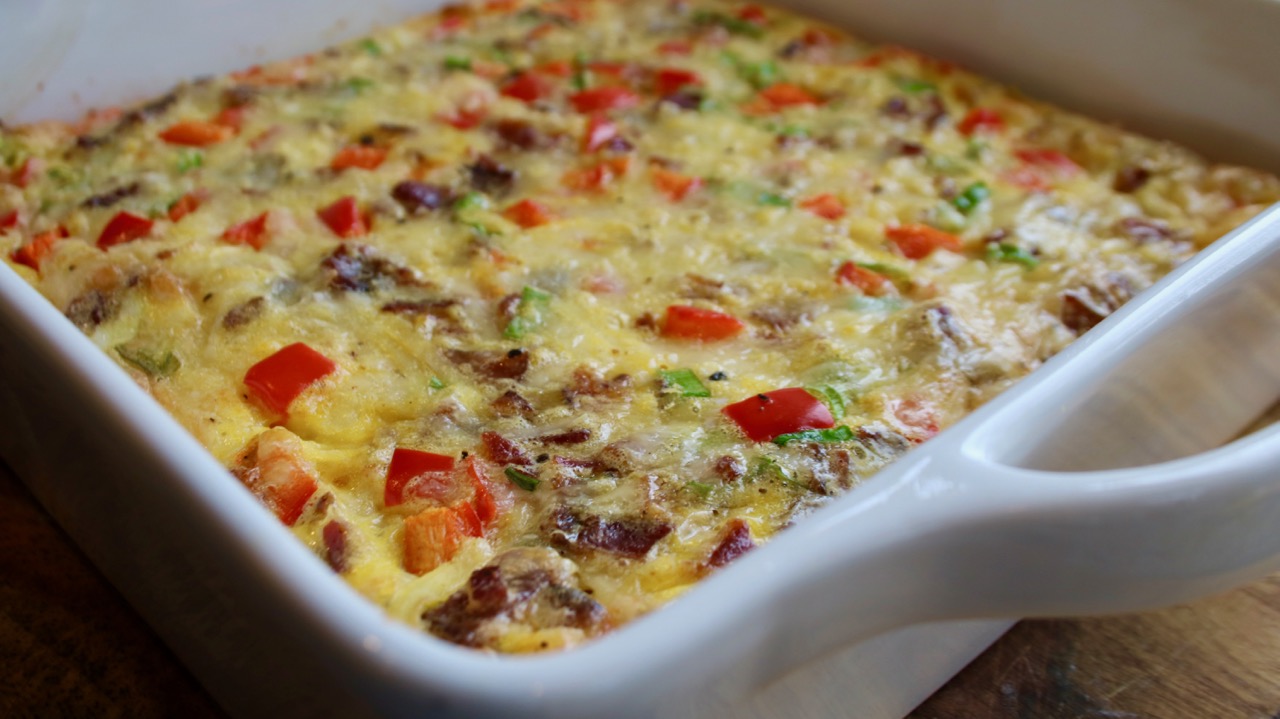
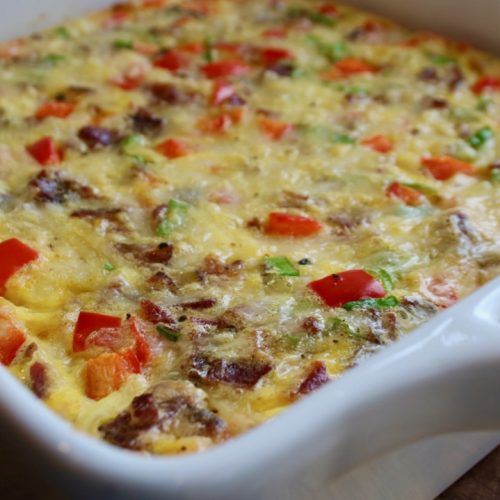
Breakfast casseroles are all the rage, and why not? They are incredibly easy to make, delicious, can be made in advance and a great way to use up leftover ingredients that you have on hand. It’s always a hit for breakfast lovers of all ages.
Similar to a frittata, but not exactly, this egg dish has become popular for KETO dieters, meal preppers, commuters, parents, and your basic brunch host. (I’m sure I am leaving someone out!) Just about everyone, of all ages, can find a variation of this breakfast casserole that they like.
Breakfast casserole is so easy, fun and completely customizable. Personally, I like to add in a layer of tater tots or hash browns because potatoes make me happy. However, they are optional. When I make this for my nieces or a group of friends, including the tater tots always earns me a few extra bonus points 🙂
Combine Eggs with Selected Vegetables & CheesesIf using Tater tots, pre cook them until just about cooked through and then layer themSmother with a layer of cheese and meat (optional)
The combinations of ingredients are endless- only your creativity will limit you! Here are some variations that I have made to hopefully inspire you to make your own!
Sausage, mushroom, onion and fontina cheese
Ham, mushroom and swiss cheese
Spinach, mushroom, onion and cheddar cheese
Broccoli, cheddar and onion
Bacon, peppers and scallions
Crab, Bacon & Cheddar
Feaster’s Tip
To cut clean portions, cook completely and cool completely Remove casserole from dish and cut into squares and replace into casserole dish. This makes it easy to reheat whole or as individual slices. You can also wrap and refrigerate or freeze individual portions for breakfast on the go.
5breakfast sausage links- cooked and sliced or diced.
Half of a large white onionsliced and sautéed.
8-9 large eggs- beaten
1/2cupheavy creamoptional, but it helps it fluff.
2tablespoonschopped fresh parsleyoptional
salt & pepper
Instructions
Preheat the oven to 400 degrees. Grease an 8×8 pyrex dish.
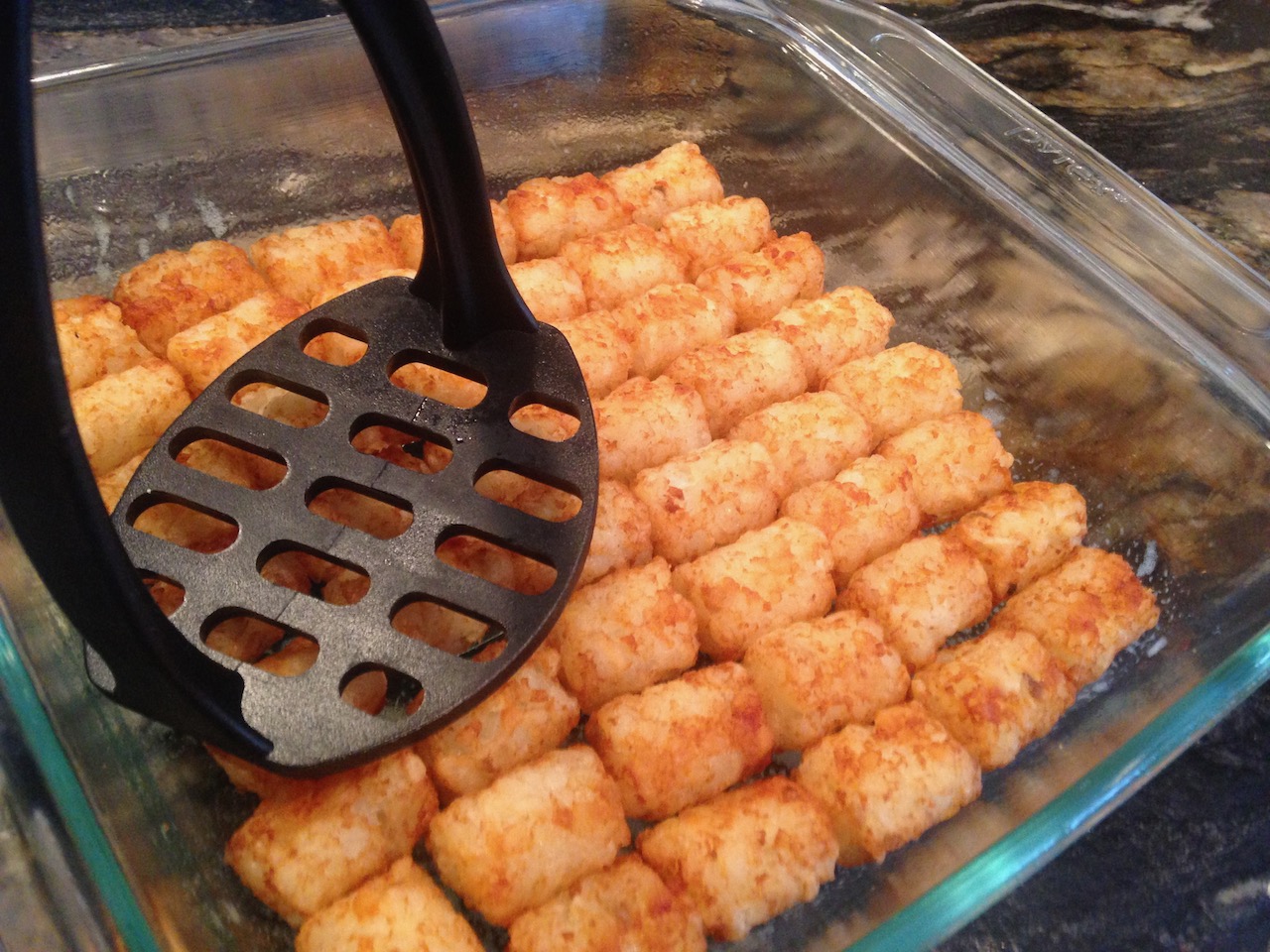
Toss the cooked tater tots with a pinch of salt & pepper for seasoning. Spread them out in a single uniform layer out on the bottom of the dish and lightly press them with the back of a spatula.
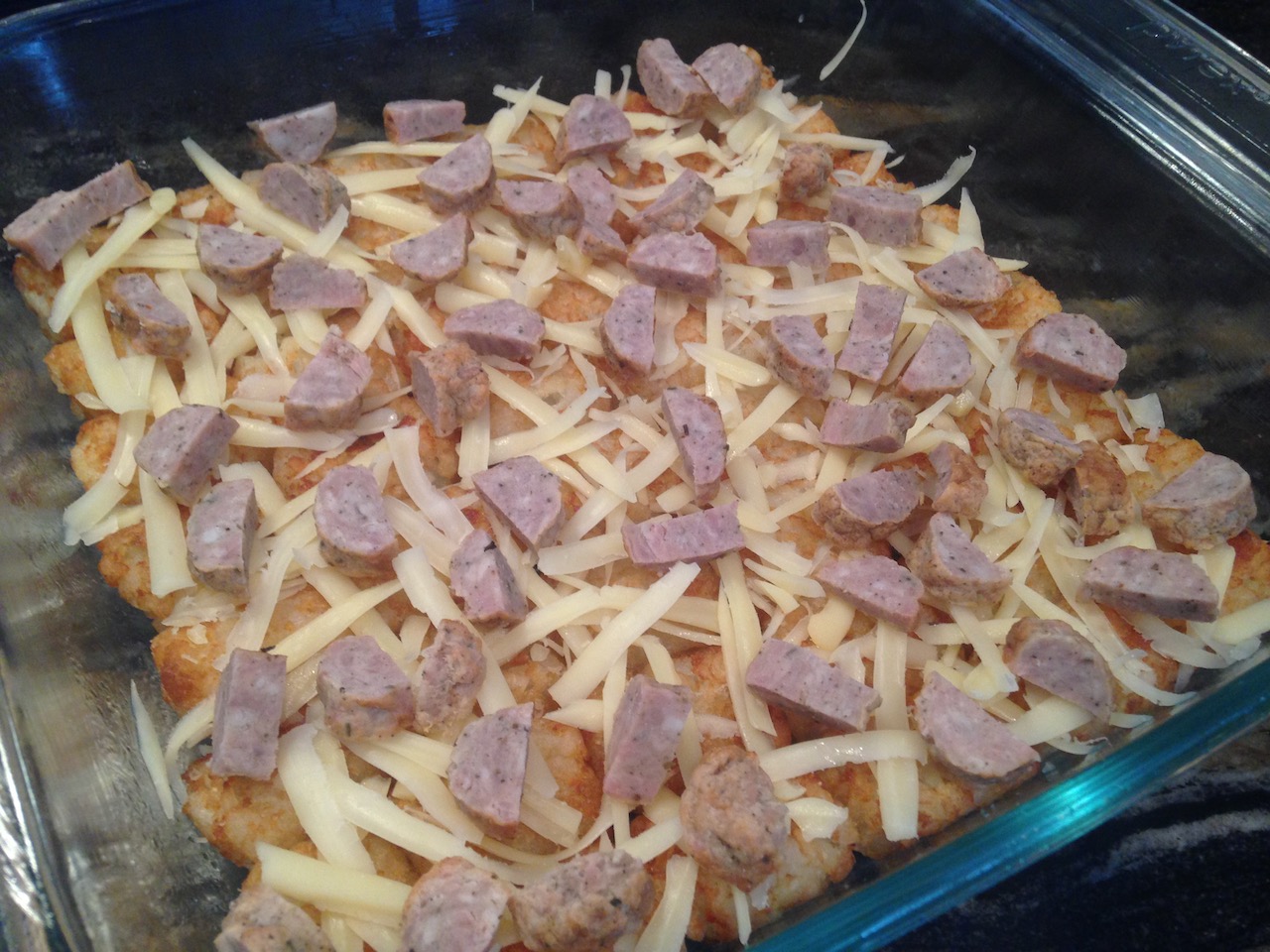
Mix the heavy cream into the beaten eggs. Season well with Salt & pepper. Mix in half of the shredded cheese, the sausage & onions and pour mixture over the tater tots.
Top with the remaining cheese and parsley. Bake for approximately 30 minutes or until cooked through.
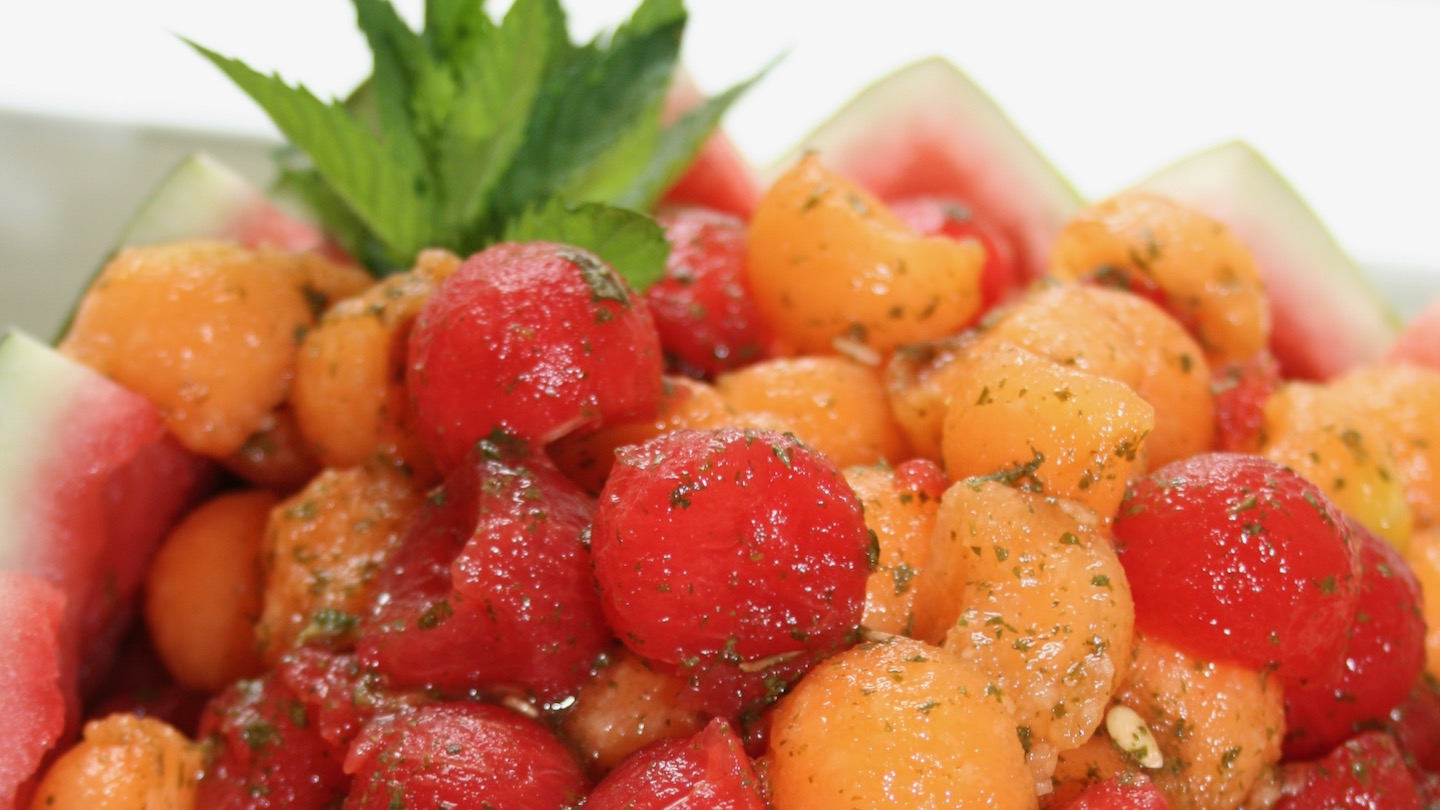
Melon means summer. So does fresh herbs. This Giada De Laurentiis recipe combines melon and mint to produce a summer fresh fruit salad that stands far above the rest.
Our garden is full of mint. It grows wild, and is a perennial that spreads, so each year our abundance increases. I used to fight it, but it turns out, most animals, especially deer, don’t like it’s fragrance and since I can use all the help I can get keeping the wildlife away from my plants, I just let it grow. I also found that it was much easier to find new recipes and ways to use the mint, than to try and fight its invasive ways. One of those recipes I found was this melon salad with mint.
This recipe is delicious, can be made in advance, and sure beats any fruit salad from a store! It is perfect for a Sunday brunch or as a light, refreshing, summer dessert.
In a blender, combine mint, lemon juice, simple syrup, and amaretto. Blend until smooth.
In a large bowl, combine the watermelon and the cantaloupe. Add the vinaigrette and toss. Transfer to a serving bowl and serve.
Simple Syrup:
In a saucepan, combine water and sugar over medium heat. Bring to a boil, then reduce heat and simmer for 5 minutes, until the sugar has dissolved. Take pan off heat and cool the syrup. Any extra cooled syrup can be saved in an airtight container in the refrigerator.
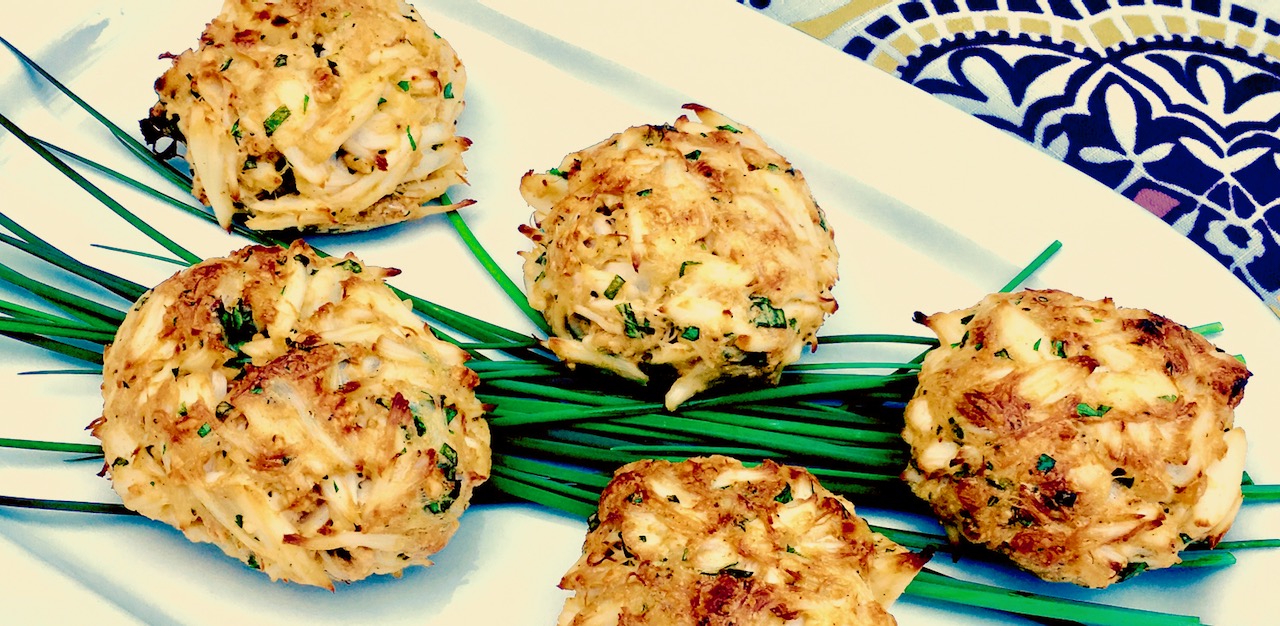
Nothing screams summer more than dining al fresco on some fresh seafood accompanied by a glass of crisp white wine. Crab cakes are a perfect dish to serve at your next summer soiree – they are not only extremely delicious and impressive, but they are baked, not fried, and can be made several hours in advance. This recipe is loaded with fresh, delicious crab meat and seasoned perfectly to elevate the crab’s delicate flavor.
Restaurants & pre-made crab cakes tend to use lots of fillers like celery, peppers, loads of breadcrumbs and more. Store bought frozen versions are often also contain several types of preservatives. Hey…I get it, but doesn’t mean I have to stand for it. Restaurants also tend to use lower cost crab, like back fin, which has a much fisher flavor and doesn’t provide those luscious lumps of delicate meat the way lump and jumbo lump does.
These crab cakes are packed with flavor, simple to make, and better than anything you’ll get out.
If you can’t find jumbo lump or don’t feel like springing for the high cost, you can confidently substitute lump crab in this recipe. I talk more about how to choose crab in my Ultimate Spicy Crab Dip Post.
To make this recipe gluten free, I have successfully substituted Ritz Crackers for gluten free butter crackers.
This crab cake recipe is all about the crab and none of fillers. Be sure to use fresh crab to best results!
Prep Time10 minutesmins
Cook Time6 minutesmins
Total Time26 minutesmins
Cuisine: Seafood
Ingredients
1large egg
2heaping tablespoons mayonnaise
1teaspoonDijon mustard
1teaspoonWorcestershire sauce
1teaspoonhot sauce
Few drops of fresh lemon juicenot to exceed 1/4 teaspoon
1teaspoonOld Bay Seasoning
1/4teaspoonkosher salt
1/8teaspoonfresh ground black pepper
1/2cupcrushed Ritz crackers
2tablespoonschopped fresh parsley
1poundfresh crabmeat(drained, patted dry an picked over for shells or cartilage)
Non-stick cooking spray
Instructions
In a medium bowl, combine the egg, mayonnaise, mustard, Worcestershire, Tabasco, lemon juice, Old Bay, salt and pepper. Mix so that all the ingredients are well-incorporated.
Add the cracker crumbs and parsley and mix well.
Gently fold in crabmeat until just combined (try not to break up lumps of crabmeat too much).
Using slightly wet hands, shape mixture into patties or use a round cookie cutter to pack and shape.
Put the crab cakes on a baking sheet lined with parchment as they're shaped. Cover loosely with foil and refrigerate for 1 hour before cooking.
Set oven on broil at 450. Spray a baking sheet with non stick spray and use a spatula to place crab cakes on tray and place in oven on medium height rack.
Cook for about 5 minutes or until golden brown. (Keep an eye on them- every broiler cooks differently. If they are burning rather than browning, move them down to a lower rack.)
Serve with lemon and tartar sauce, or seafood remoulade.
I love making homemade pasta, especially raviolis. I love making raviolis so much that when I can’t sleep, I actually lie there thinking up new ravioli recipes in my head. This pretty much proves my level of obsession with food.
One night, I was working through an idea for a crab ravioli filling and got really stuck on what sort of sauce would work best for it. It needed to be something delicate as to not over power the crab’s clean, fresh flavor. I also knew it need to be thick enough to stick to the silky homemade pasta dough. Butter seemed the obvious choice, but I didn’t want a greasy, heavy dish. I wanted a sauce that would feel light and inspired by spring, and would elevate the crab, and not disguise it. Pea. Pea puree, I thought. And what if I cut it with a drizzle of olive oil for a added level of depth and fresh lemon zest for some brightness? Mmmm…this could work, I thought.
It took a few weeks for me to really work through the ingredients that I wanted to use and exploring the best possible combination of flavors. I was trying to imagine how the flavors and textures would come together. Finally, decisions were made and finally, it was time to see if I could take the recipe I developed in my head, to a plate. I couldn’t wait to find out if it would be as good as I imagined it could be.
It’s an extremely satistfying feeling to bring a dish to life and have it look and taste just the way you imagined it could. This happened with this dish. It tasted and plated exactly how I had envisioned it.
The lemon zest seasoned the crab while lightening the hearty ricotta. The fresh herbs in the crab mixture helped tie the pea sauce to the ravioli filling and also introduced refreshing flavor notes. The ricotta cheese bound everything together in wonderful harmony. The delicate homemade pasta dough ensured a silky texture that carried through the entire dish. It was delicate and delicious. I can’t wait see what recipe I come up with the next time I can’t sleep!
Fresh Crab, lemon zest and pea puree come together for a perfect savory spring dish
Cook Time6 minutesmins
Course: Main Course
Cuisine: International
Servings: 3
Ingredients
1cup fresh lump crab, picked over for shells and dried
.5cupwhole milk ricotta Calabro brand
1.5tspvery finely minced fresh parsley
1/4tsp very finely minced fresh dill leaves
3tbspgood quality freshly grated parmesan cheese
1/8tspvery fine fresh grated pepper(about 8 turns on pepper mill)
3/4-1tspkosher salt
1lemonfinely zested (for filling mixture)
A few longer strands of grated lemon peel for garnish
Instructions
Combine all ingredients into a medium size mixing bowl. Use the back of a fork and work your way around the bowl to combine ingredients very, very well. The crab should be broken down and the mixture should be similar to a spreadable cheese. (Optional: Add mixture into a piping bag)
Using your favorite fresh pasta recipe, roll out your dough into sheets and prepare your dough for filling.
Fill raviolis with about a teaspoon of mixture, or as much as is needed for your ravioli frame.
After raviolis are sealed, set onto a tray lined with parchment, and heavily floured with semolina so the raviolis do not stick to the parchment. Keep cold.
Cook raviolis for about 3 minutes in boiling, salted water. Gently add to sauce pan and plate raviolis with extra crab. Garnish with lemon zest peels. Drizzle with olive oil. Serve hot.
Notes
I used the following recipe as the basis of my pea puree with some personal changes along the way. You can use any light, pea or a pea and mint soup recipe, and adjust it to the right thickness and flavor profile. Just make sure it is very silky & smooth. https://www.foodnetwork.com/recipes/ellie-krieger/green-pea-soup-recipe-1945458
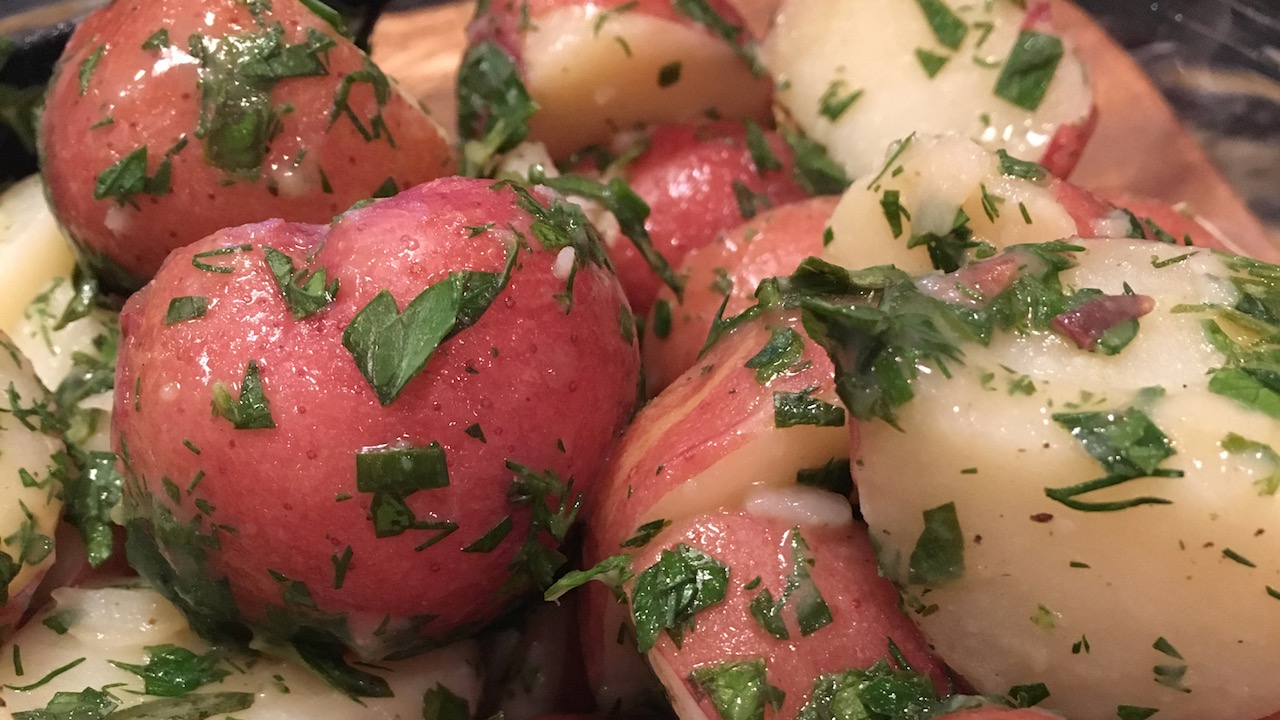
Fresh herbs are one of my favorite things about summer cooking and this recipe is a great way to showcase my garden’s bounty. The chopped herbs are tossed with warm potatoes, champagne vinegar and white wine to come together for a fabulous summer side dish. Ina Garten’s French style, no-mayo, potato salad is going to take your average summer barbecue to the next level. It’s a fantastic served as a side dish accompanying crab cakes, a grilled steak or even simple hamburgers.
The herbs can take some time to prep, but it’s worth it to serve up what everyone is sure to tell you, is the best potato salad they have ever had. After making this homemade potato salad, you never serve the stuff from the deli counter ever again!
Feaster’s Tip:
This recipe is best if served within a few hours of making, warm or at room temperature, however, this dish holds up pretty well for about 24 hours if you need to make it in advance. After that, the herbs start to brown and breakdown. If refrigerated, take out about an hour before serving to take the chill off.
Ina Garten’s French Potato Salad is full of fresh herbs and vinagar and the perfect dish to elevate your next backyard barbecue!
Prep Time30 minutesmins
Cook Time30 minutesmins
Total Time1 hourhr
Course: Side Dish
Cuisine: American, French
Keyword: potato, side dish, vegetarian
Author: Ina Garten
Ingredients
1poundsmall white boiling potatoes
1poundsmall red boiling potatoes
2tablespoonsgood dry white wine
2tablespoonschicken stock
3tablespoonsChampagne vinegar
1/2teaspoonDijon mustard
2teaspoonskosher salt
3/4teaspoonfreshly ground black pepper
10tablespoonsgood olive oil
1/4cupminced scallionswhite and green parts
2tablespoonsminced fresh dill
2tablespoonsminced flat-leaf parsley
2tablespoonsjulienned fresh basil leaves
Instructions
Drop the white and red potatoes into a large pot of boiling salted water and cook for 20 to 30 minutes, until they are just cooked through. Drain in a colander and place a towel over the potatoes to allow them to steam for 10 more minutes. As soon as you can handle them, cut in 1/2 (quarters if the potatoes are larger) and place in a medium bowl. Toss gently with the wine and chicken stock. Allow the liquids to soak into the warm potatoes before proceeding.
Combine the vinegar, mustard, 1/2 teaspoon salt, and 1/4 teaspoon pepper and slowly whisk in the olive oil to make an emulsion. Add the vinaigrette to the potatoes. Add the scallions, dill, parsley, basil, 1 1/2 teaspoons salt, and 1/2 teaspoon pepper and toss. Serve warm or at room temperature.
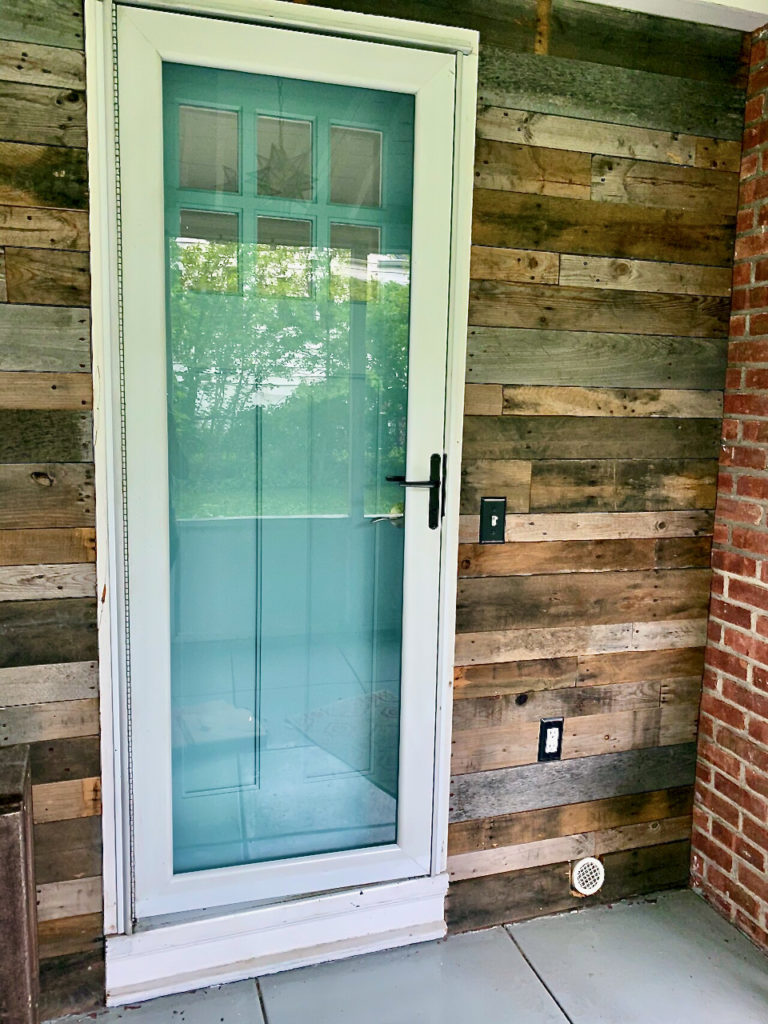
We have a screened-in porch and after ten years, we finally gave it some much needed attention. We worked hard at some serious DIY projects and together, we added a pallet wall to the porch, hung hammocks, and built our very own farmhouse style table. We turned it into the porch we always wanted.
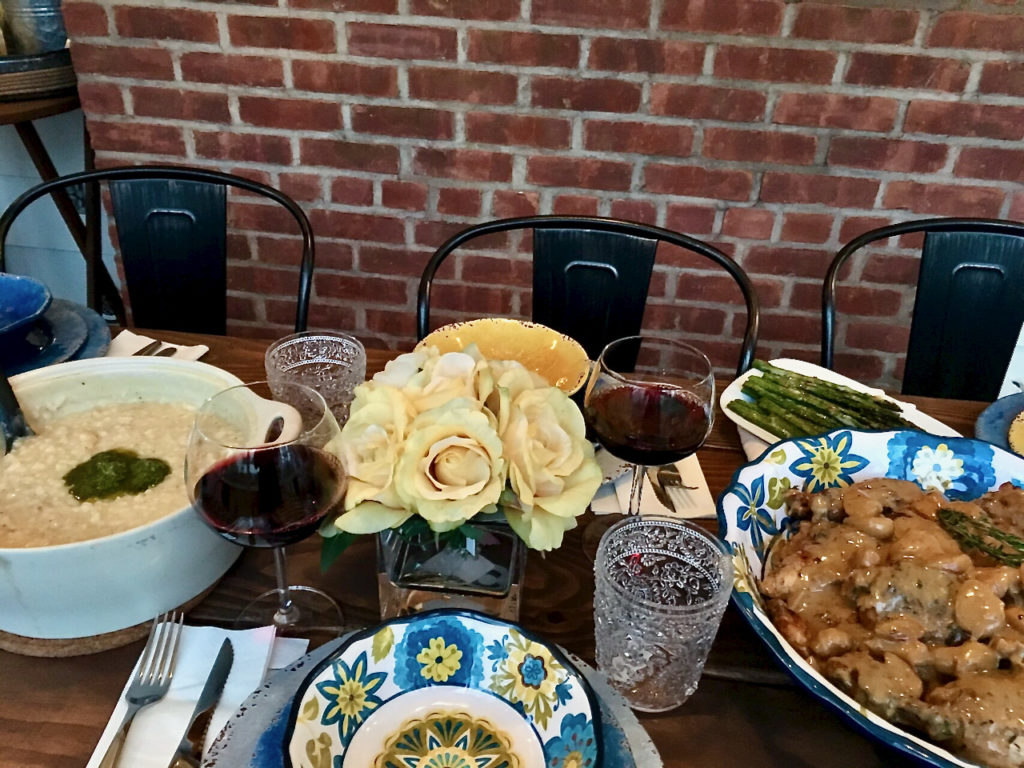
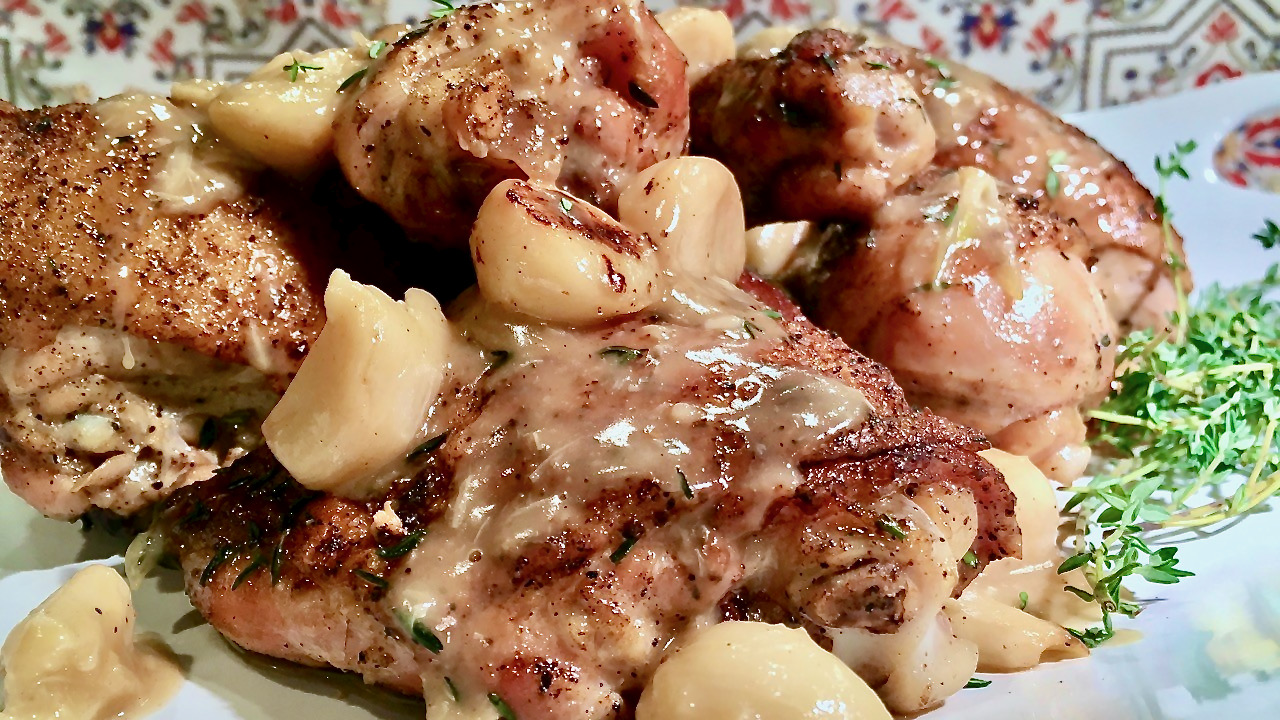
Finally, after months of hard work, it was time for Feast & Merriment with friends and neighbors. The inaugural dinner was one I gave great thought to. I wanted to create the feeling of being on a farm in France, enjoying intensely flavorful comfort foods, and sipping delicious wines with friends. (Granted, I have yet to make it to the country side of France, but this is what I picture in my head. So I’ll just roll with it.) I finally decided that the star of the evening would be the French classic, Chicken with 40 cloves.
The evening, and the chicken, were simply divine. I recommend this recipe for a special occasion served with a rich and buttery chardonnay.
Tips for this recipe:
This is a wonderful recipe, but before you commit to it, you should know that it is an intermediate level recipe and a good amount of work to prepare. You need to commit to it and be sure to carve out enough time.
Double or triple the sauce. You won’t regret it.
Factor in extra clean up time for after searing off all the chicken- it splatters, takes longer than you think and not something you want to do with company in your kitchen. Once you get past that step, you’ll be on your way! I recommend searing the chicken, setting it aside, cleaning up, re-grouping, and then you’ll be on your way.
Separate the cloves of garlic and drop them into a pot of boiling water for 60 seconds. Drain the garlic and peel. Set aside.
Dry the chicken with paper towels. Season liberally with salt and pepper on both sides.
Heat the butter and oil in a large pot or Dutch oven over medium-high heat. In batches, saute the chicken in the fat, skin side down first, until nicely browned, about 3 to 5 minutes on each side. Turn with tongs or a spatula; you don’t want to pierce the skin with a fork.
If the fat is burning, turn the heat down to medium. When a batch is done, transfer it to a plate and continue to saute all the chicken in batches.
Remove the last chicken to the plate and add all of the garlic to the pot. Lower the heat and saute for 5 to 10 minutes, turning often, until evenly browned.
Add 2 tablespoons of the Cognac and the wine, return to a boil, and scrape the brown bits from the bottom of the pan.
Return the chicken to the pot with the juices and sprinkle with the thyme leaves. Cover and simmer over the lowest heat for about 30 minutes, until all the chicken is done.
Remove the chicken to a platter and cover with aluminum foil to keep warm.
In a small bowl, whisk together 1/2 cup of the sauce and the flour and then whisk it back into the sauce in the pot.
Raise the heat, add the remaining tablespoon of Cognac and the cream, and boil for 3 minutes.
Add salt and pepper, to taste; it should be very flavorful
Pour the sauce and the garlic over the chicken and serve hot.
Notes
Be sure to serve the chicken with a nice, crusty bread to soak up any remaining sauce. Trust me, you will want to.
[vc_row][vc_column][vc_custom_heading text=”Never loose sight of simplicity” font_container=”tag:h2|text_align:left|color:%23e69b10″ use_theme_fonts=”yes”][mk_dropcaps style=”fancy-style” background_color=”#727272″]I[/mk_dropcaps][vc_column_text css=”.vc_custom_1539656900715{margin-bottom: 0px !important;}”]recently returned from my first trip to my ancestor’s homeland, Italy. I wanted to go to Italy for many reasons but above all this, I wanted to experience the food. It was a truly incredible experience and I learned so much about history, culture and my heritage, but what I enjoyed the most was the small restaurants that opened a whole new appreciation for both cooking and eating with seasonal ingredients.[/vc_column_text][/vc_column][/vc_row][vc_row][vc_column width=”1/2″][vc_single_image image=”351″ img_size=”300×300″ style=”vc_box_rounded” onclick=”link_image”][/vc_column][vc_column width=”1/2″][vc_column_text css=”.vc_custom_1539657451037{margin-bottom: 0px !important;}”]Everything in Europe is so different than here in the U.S. but the food is truly a unique experience. Meals are created around fresh, seasonal ingredients not by what is on sale in the frozen food section. Although I am sure they exist, I could not even find a frozen department in any of the food markets I stopped into! The flavors are simple and beautiful and delicious. It was important for me to remember that sometimes the best meals come from the fewest, freshest ingredients.[/vc_column_text][/vc_column][/vc_row][vc_row][vc_column][mk_blockquote font_family=”none”]
To cook Italian means to… Cook with love. Cook simply. Cook fresh.
[/mk_blockquote][/vc_column][/vc_row][vc_row][vc_column][vc_column_text css=”.vc_custom_1539657472171{margin-bottom: 0px !important;}”]Since my return home, I have been cooking with that Italian approach of simplicity. The main ingredient, whether a meat protein or a vegetable, should shine in it’s purest form rather than be masked in other flavors. Usually all it takes to create a wonderful, beautiful Italian dish is some extra virgin olive oil, salt, pepper and a dash of an acid. It’s remarkably humbling to cook seemingly simple dishes because you must respect each ingredient to it’s fullest and cook it perfectly. In fact, there is nothing simple about cooking simply.[/vc_column_text][/vc_column][/vc_row][vc_row][vc_column][vc_single_image image=”350″ img_size=”full” alignment=”center” style=”vc_box_rounded”][/vc_column][/vc_row]
Call me Corney, but I love this beef! A beloved tradition by many, corned beef on St. Patrick’s Day represents the spirit of this Irish celebration for all.
When it comes time to make this traditional meat, look no further for the best corned beef recipe. Its tender, flavorful slices are ever present at annual gatherings and hearty feasts during this festive time of year. I have been using this same reliable recipe for almost 2 decades and it’s perfect every time. My only mistake is never making enough!
Corned beef is just like turkey. Why? Because people only make it once a year! I don’t know why- it’s just the way it is. Is it hard to make? No. Is it delicious? Yes. And again, just like turkey, the only thing better than dinner itself, is the leftovers.
What is corned beef?
The term “corned” basically means it is salted meat. Similar to a cured meat, like prosciutto. However where prosciutto is cured and dried, corned beef is cured but not dried, and still requires cooking.
As for the cut of beef, it is typically the brisket cut and often comes with the fat cap still attached.
How to buy corned beef
Not all corned beefs are created equal. Like many cured meats (bacon, sausage, etc.) most corned beefs are loaded with nitrates which are a known carcinogen. I do my best to avoid them, and you should too. It’s nitrates and their nasty comrades that give some corned beef its well known pink color, and also expands their shelf life to question amounts of time. (This also keeps the price down.) When you remove all that stuff, you end up with a less attractive, but more delicious, brown cut of beef. The choice is yours. I always opt for nitrate free when given the option.
What to serve with Corned Beef
Corned beef is really quite easy to make. It’s the fixings that bring it all together. I love a really good, spicy mustard and a side of cabbage. Or, you can make corned beef sandwiches, better known as rubens. There is something so craveable about thinly sliced corned beef smothered with melted Swiss cheese, covered in sauerkraut and mustard on Rye. Ohh… how I love a ruben. Thus, I always make double the amount of corned beef so we have plenty of leftovers!
Roasted Cabbage
This simple yet elegant side dish is a testament to the transformative power of roasting, turning ordinary ingredients into extraordinary culinary experiences.
With its hearty flavors and simple preparation, this corned beef recipe is a delicious way to celebrate St. Patrick’s Day. Whether you’re serving it with a traditional side of cabbage or sandwiching it between slices of bread for a delicious ruben sandwich, this corned beed recipe is sure to become a favorite in your household. So gather your loved ones, raise a toast to tradition, and enjoy the flavors of this timeless Irish dish. Sláinte!
From Tough to Tender
Because corned beef comes in so many different thicknesses, weights and shapes, it’s not always easy to know when it is done. While the average time in this recipe is about 3 hours, there are variables that can impact that. It’s pretty easy to check it with a fork over so often and gauge its level of tenderness, but if you really want a perfect cook, a quick spot check with Thermapen ONE will make sure you’ve hit the target temp of 190°F (88°C). Brisket is a thick, tough cut, so once your corned beef reaches this internal temp, it still needs time for the collagen to break down which will happen during resting from carry over time.
Thermoworks Thermapen One®
A new standard of accuracy for the discerning cook
The Thermapen® ONE was designed with speed and accuracy in mind. If you are a cook who values precision, this thermometerl will revolutionize your cooking experience.
To make corned beef ahead of time prepare the meat entirely, let it cool completely, wrap tightly and refrigerate for up to 3 days. When ready to serve, slice cold and place into an oven safe dish. Drizzle with reserved cooking liquid or low sodium chicken stock. Reheat at 350°F until heated through.
Corned beef shrinks considerably! You should figure on about a 3/4 to 1 pound a person when buying it.
Use a very sharp knife to slice and always slice ACROSS THE GRAIN!
A beloved tradition by many, corned beef on St. Patrick's Day represents the spirit of this Irish celebration for all. Its tender, flavorful slices are ever present at annual gatherings and hearty feasts during this festive time of year.
Prep Time10 minutesmins
Cook Time3 hourshrs45 minutesmins
Total Time3 hourshrs55 minutesmins
Course: Main Course
Cuisine: Irish
Ingredients
One 3lb.corned beef brisketin brine
16cupscold water
2bay leave
6all spice berries
3whole cloves
Mustard for serving
A Large Dutch Oven
Instructions
Preheat oven to 275°F.
Rinse Corned Beef. Place beef in dutch oven, add all ingredients and bring to a boil on the stove top. Meanwhile, skim off any scum that rises to the surface.
Cover and transfer to the oven for 3 hrs. It should be fork tender. If it does not want to split with a fork, let it cook longer. (If you have an instant read thermometer, the goal temp is 200°F + rest time)
If serving immediately, remove from liquid and set aside. Cover loosely with foil and let rest for about 20 minutes. If you are cooking in advance, remove from heat and let it come down in temperature in or out of the liquid, and then wrap tightly until ready for use.
Slice the meat ACROSS THE GRAIN into 1/4 inch slices. If you do not cut this meat across the grain, it will be chewy. To make sure you are slicing correctly, slice a piece and if you can break it apart easily, you are on the right track.
Serve with good quality spicy mustard
Notes
*corned beef shrinks considerably! You can figure on about a pound a person when buying it. Make extra for leftovers and make Ruben Sandwiches!
This easy & elegant recipe for Goat Cheese and Asparagus Tarts is one of my favorite uses for puff pastry. It is simple to make and the result is absolutely stunning.
This Asparagus & Goat Cheese puff pastry tart is a blend of simple, seasonal and sophisticated flavors. Leveraging the versatility of puff pastry, this dish effortlessly marries the spring essence of asparagus with the creamy tang of goat cheese, resulting in a savory dish that is as visually stunning as it is delicious!
Puff pastry tarts of all kinds are an elegant and impressive dish that don’t require much fuss. All you need are a few really tasty ingredients which require minimal effort while yielding maximum impact.
How to make a puff pastry tart
Whenever you work with puff pastry you need to the thaw the frozen pastry but keep it chilled. This means thawing it the refrigerator overnight for the best results. Once the puff pastry is thawed, it is ready for use. Do not take it out of the fridge until you are ready to work with it! This prevents the pastry from getting oily. In nutshell- keep it cold!
Meanwhile, get your ingredients ready. Sauté the onions until soft and translucent (this can be done up to 2 days in advance), chop fresh asparagus and crumble goat cheese. These savory elements are then arranged atop the puff pastry and baked for 20-25 minutes.
These tarts can be made in small, bite size versions or larger and served with a side salad for an entree. The results taste great, no matter the size. I often make these in bite size and serve as an hors d’oeuvre along with cocktails or served large with size salad as an elegant lunch or light dinner.
Other ways to use this Puff Pastry recipe
This recipe is an excellent platform for getting really creative with the flavors you like. Once you have the basics down and the onion mixture made, the opportunities are endless. I have made all kinds of tarts based on what I had on hand such as tomato and parmesan, mushroom and brie, and many more varieties. Asparagus and goat cheese is always a winner with my crew so it’s my “go-to” version, but don’t be scared to get creative and do your own thing here if you aren’t a fan of asparagus- just stick to the basics and your tarts will come out amazing!
Make Ahead
One of the best things about this recipe is its convenience. These tarts can be prepared completely tarts in advance. Simply prepare, place in fridge until ready to use, and bake to order.
Pro Tip!
When using puff pastry, make sure you defrost it in the refrigerator overnight. You need it to remain cold, but it cannot be frozen or it will crack when you start to work it. This means you need to plan one day ahead when you make this tarts, but planning is really the hardest part!
Two Ingredient Appetizer: Prosciutto wrapped Asparagus
Bite sized pieces of asparagus wrapped in prosciutto are an elegant and easy addition to any cocktail hour or dinner party for friends!
Asparagus is the most quintessential of all spring vegetables and preparing it couldn’t be easier. Simply toss with olive oil, salt & pepper and bake for 12-15 minutes until tender.
Unfold a sheet of puff pastry on a lightly floured surface and roll it lightly to an 11 by 11-inch square. Using a 6-inch round object as a guide, cut 2 circles from the sheet of puff pastry, discarding the scraps. Repeat with the second pastry sheet to make 4 circles in all. Place the pastry circles on 2 sheet pans lined with parchment paper and refrigerate until ready to use.
Preheat the oven to 425 degrees F.
Heat 3 tablespoons of olive oil in a large skillet over medium to low heat and add the onions and garlic. Saute for 15 to 20 minutes, stirring frequently, until the onions are limp and there is almost no moisture remaining in the skillet. Add 1/2 teaspoon salt, 1/4 teaspoon pepper, the wine, and thyme and continue to cook for another 10 minutes, until the onions are lightly browned. Remove from the heat.
Using a sharp paring knife, score a 1/4-inch-wide border around each pastry circle. Prick the pastry inside the score lines with the tines of a fork and sprinkle a tablespoon of grated Parmesan on each round, staying inside the scored border.
Place 1/4 of the onion mixture on each circle, again staying within the scored edge. Crumble 1 ounce of goat cheese on top of the onions. Scatter the Asparagus in the center of each tart. Sprinkle with basil, salt, and pepper.
Bake for 20 to 25 minutes, until the pastry is golden brown. The bottom sheet pan may need an extra few minutes in the oven. Serve warm.
Apparently, lettuce likes summer rain because I’ve had a bumper crop of lettuce this season and that’s about the only think I am loving about this wet season that we are having.
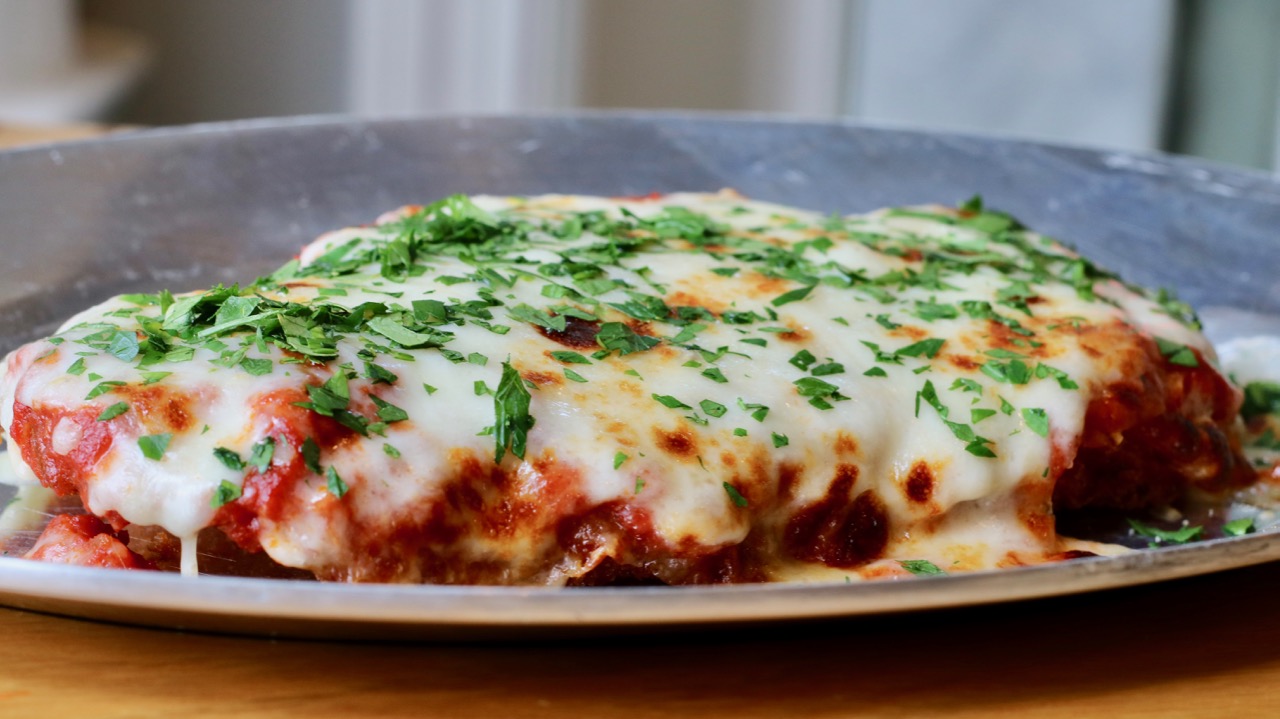
With so many leafy varieties doing so well in our garden this year, I’ve really had a chance to work on matching the different textures and flavors of the varietals with different meals, and finding the perfect dressings to accompany them. The delicate, silky nature of the butter lettuce and red oak varieties take well to simple dressings like a lemon vinaigrette. Anything more than a squeeze of fresh lemon, splash of olive oil, salt and pepper overpowers the delicate eaves.. When I match those varieties with a heavier meal, like chicken parmesan, I find the meal to be harmonious. On the other hand, the romaine is hearty and can stand up to a bolder flavor and a thicker texture- which is why it’s the preferred lettuce choice for a classic, tangy caesar dressing.
Caesar dressing is very, very popular. I am confident that it is the most common item on menus across the country, meaning that just about every restaurant has a version of caesar salad on it. Given it’s popularity, it amazes, and disappoints me, that nine out of ten times I order it, it’s really not impressive. Some places serve more of a vinaigrette version, while others are garlic forward and creamy, some with raw egg, others with cream. Personally, I like a tangy, creamy, salty caesar. I don’t see how it can be any other way.
Having never made homemade caesar dressing before, I really wasn’t sure where to start or how to select a good recipe. So I decided to make three versions, one of which contained no egg. I was hoping I was going to like it the no egg version but unfortunately it came in last in the taste test. You simply need the egg.
The winning recipe turned out to be Michael Chirarello’s recipe. Over time I have tweaked it slightly to create a version that we really enjoy.
1/2cupgood quality parmesan cheese.I like a parmesan/romano mix
Instructions
Place the egg yolk, mustard, anchovies, garlic, vinegar, lemon juice, and a dash of Worcestershire sauce in a blender or food processor. Blend until pureed. With the motor running, add the olive oil in a slow stream. If the dressing stops moving in the blender, stop the machine, add the warm water and then continue until all the oil is added. To finish, add the cheese and pulse to incorporate. Taste and adjust your seasonings.
Toss with Romaine lettuce leave and croutons, if desired.
A personal look at why reducing meat and fish has been harder than I ever expected—and how I’m learning to rethink what satisfaction on a plate really means.
I recently had the pleasure of sharing a glass of wine with a Food Scientist. I wasted no time in asking her all kinds of questions about natural vs organic foods, GMO vs non-GMO, wild fish vs. farmed fish and fresh food vs processed food. It was a enlightening conversation that I enjoyed very much.
During our conversation, she asked me if I had heard of the book ‘The China Study.” I had told her that I had not. She went on to explain that it is a complicated read, even by her standards, but that she can’t deny the premise of the book which, to summarize, suggests that the more animal protein you consume, the faster the cancer gene is likely to become active.
I found this interesting ‘food for thought.’ I also found it incredibly depressing but also, I wasn’t surprised.
Inspired by this conversation and the new knowledge that I had, I have been challenging myself to cut down on my meat intake. I didn’t think it would be that hard because I really love vegetables. As it turns out, despite that I enjoy eating vegetables and even have a abundant vegetable garden, it’s been much more difficult than I had anticipated to reduce my animal protein intake.
After struggling to make this dietary change, which was not a removal of meat from my diet, but rather a reduction, I realized just how addicted we are to consuming animal protein as our primary food intake. In a continued effort to move away from the meat but still feel satisfied, I threw myself into research about fish to see how it compared to the negative health impact of meat consumption. My greatest fears were realized that fish is just as bad as meat to consume on a regular basis.
What’s one to eat when one is love with clams, and roasted chicken, and a really great steak?
This little experiment of mine to reduce my animal protein intake continues to challenge me. It has made me realize, “The China Study” or not, it’s time to expand my weeknight meals to include more vegetables and curb my now recognized addiction to animal protein.
By posting this online for everyone to read, I hope to challenge myself to come up with some great vegetarian meals to share and to inspire you to add more vegetables (raw whenever possible) to your menus.